

Packaging Integrity in Wholesale: What Brands Must Know
Packaging integrity is defined as the complete protection of a product’s contents from contamination, damage, and leakage throughout the entire distribution chain.
Packaging integrity is defined as the complete protection of a product’s contents from contamination, damage, and leakage throughout the entire distribution chain. For wholesale buyers and kitchenware brands, the role of packaging integrity wholesale operations play cannot be overstated. A single packaging failure at scale triggers returns, chargebacks, and contract losses that far exceed the cost of prevention. Industry standards like AQL ISO 2859-1 and USP <1207> now set the baseline for what wholesalers must meet, and regulators expect documented evidence, not just visual checks.
Packaging integrity at a glance
- Defect tolerance under
AQL ISO 2859-1: zero critical defects, 2.5 for major issues, 4.0 for minor cosmetic flaws - Quantitative leak-rate testing against a
MALL(Maximum Allowable Leakage Limit) has replaced pass/fail visual seal checks - Pre-shipment inspection is most effective after
80%–100%of production is packed - A complete protocol covers leak, compression, stack, tamper validation, and distribution simulation tests
- Three-stage quality control:
IQC / IPQC / FQCfrom incoming materials to the finished packed unit - A Golden Sample locks in materials, coatings, and tolerances against reorder-cycle quality drift
EPR(Extended Producer Responsibility) reporting is a documented requirement in multiple major export markets
What are the industry standards and testing protocols for packaging integrity in wholesale?
Packaging integrity testing is governed by a defined set of standards, not left to supplier discretion. The AQL ISO 2859-1 framework sets defect tolerance thresholds that most wholesale buyers should treat as non-negotiable: zero critical defects, 2.5 for major functional or visual issues, and 4.0 for minor cosmetic flaws. These numbers give buyers a concrete benchmark to write into supplier contracts.
Quantitative leak-rate testing, as defined by USP <1207> and FDA expectations, has replaced traditional pass/fail visual seal checks for sensitive products. Quantitative measurement against a Maximum Allowable Leakage Limit (MALL) is now a regulatory expectation for sterile and pharmaceutical packaging. Kitchenware brands shipping food-contact products face similar scrutiny from import regulators.

Pre-shipment inspection (PSI) timing matters as much as the tests themselves. PSI is most effective after 80%–100% of production is packed, because only then can inspectors run physical stress tests on sealed shipping cartons. Catching failures at this stage costs a fraction of what downstream damage management runs.
A complete testing protocol covers more than one method. Tests should include leak testing, compression, stack testing, tamper validation, and distribution simulations to replicate real-world conditions. Each test targets a different failure mode, and skipping any one of them leaves a gap.
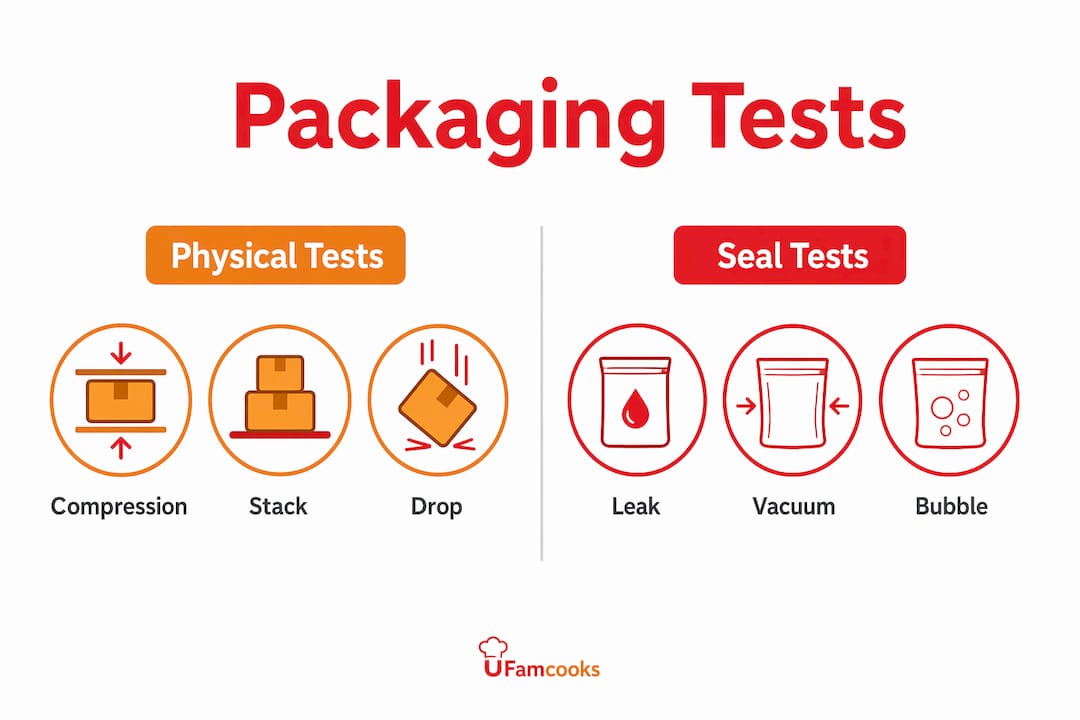
| Test type | What it catches |
|---|---|
| Leak testing | Seal failures and microscopic breaches |
| Compression testing | Structural collapse under load |
| Stack testing | Pallet stability across transit |
| Tamper evidence validation | Seal integrity and consumer safety |
| Distribution simulation | Combined vibration, drop, and humidity effects |
Pro Tip: Request your supplier’s actual test data files, not just a pass certificate. Documented quantitative results are what auditors and import regulators want to see.
In brief Wholesale packaging is accepted or rejected against AQL ISO 2859-1 thresholds (0 critical / 2.5 major / 4.0 minor), verified by quantitative leak-rate, compression, stack, tamper, and distribution-simulation tests, with pre-shipment inspection run once 80%–100% of production is packed.
How does packaging integrity affect wholesale operations and brand reputation?
Poor packaging integrity triggers a commercial chain reaction. Packaging failures escalate returns, complaints, and operational disruption, threatening contracts and eroding distributor margin across wholesale food and kitchenware supply chains. A single batch of crushed or contaminated product can generate weeks of warehouse disruption and customer service load.
The financial exposure compounds quickly. Misaligned packaging design increases retailer chargebacks through nonstandard pallets, missing labels, and cases that fail under stacking pressure. Each chargeback reduces your effective margin on that order, and repeated chargebacks put the entire account relationship at risk.
Packaging failures do not stay contained. One compromised shipment generates damage reports, spoilage claims, and warehouse inefficiencies that ripple through every downstream partner in the supply chain. The reputational cost outlasts the financial one.
Brand reputation takes the longest to rebuild. Buyers who receive damaged kitchenware at retail level associate the failure with the brand, not the carrier. That perception shapes reorder decisions and referral behavior. Packaging quality in wholesale is, in effect, a brand signal delivered at scale.
Common packaging performance issues that create downstream business problems include:
- Seal failures that allow moisture or contaminants into stainless steel product packaging
- Insufficient box compression strength causing stack collapse in warehouse storage
- Label placement errors triggering retailer chargebacks and compliance holds
- Inadequate cushioning leading to surface scratches on finished kitchenware
- Pallet misalignment creating handling difficulty and load instability during transit
In brief One packaging failure cascades into returns, retailer chargebacks, and weeks of warehouse disruption, and retail buyers blame the brand, not the carrier, when damaged kitchenware arrives.
What are best practices for maintaining packaging integrity in wholesale supply chains?
Consistent packaging quality requires a system, not a one-time check. The most reliable approach combines locked-in specifications, staged quality control, and testing tied to actual distribution conditions.
- Lock in a Golden Sample.Without a locked-in sample specifying materials, coatings, and tolerances, wholesale buyers face quality drift by the third or fourth reorder cycle. The Golden Sample becomes the physical contract between buyer and supplier.
- Run three-stage quality control.Incoming Quality Control (IQC) checks materials before production starts. In-Process Quality Control (IPQC) monitors packaging during the run. Final Quality Control (FQC) validates the finished, packed unit. Skipping any stage creates blind spots that only surface after shipment.
- Test for your actual distribution environment.Packaging designed around standard pallet configurations rather than purely product dimensions improves distribution stability and reduces chargebacks. Design the box around how it ships, not just what it holds.
- Require documented quantitative data.In-house quantitative leak-rate and compression testing tied to actual supply chain conditions is the only reliable way to verify packaging integrity. Visual inspections alone miss microscopic seal failures that cause contamination.
- Build traceability into every batch.Each production run should carry documented test results, material certificates, and inspection records. Regulatory auditors demand documented evidence of packaging suitability, and that expectation is spreading beyond pharmaceuticals into food-contact and kitchenware categories.
Pro Tip: Work with your packaging supplier to establish in-house testing capability at their facility. Suppliers who test on-site and share raw data are far less likely to ship borderline product.
In brief Reliable wholesale packaging rests on a locked-in Golden Sample, three-stage IQC/IPQC/FQC control, distribution-matched testing, documented quantitative data, and batch-level traceability.
How do material choices and design influence packaging integrity and compliance?
Material selection determines how well packaging performs under real distribution stress. Corrosion-resistant coatings and moisture barriers protect stainless steel kitchenware from humidity exposure during ocean freight, which can span weeks. The right material specification prevents surface degradation before the product reaches the buyer.
Oxygen and moisture barrier properties vary significantly across packaging materials. Corrugated cardboard suits most kitchenware applications and supports recyclability, but it must meet specification and sourcing requirements to comply with Extended Producer Responsibility (EPR) reporting. EPR compliance is now a documented requirement in multiple major export markets, not a future consideration.
Container weight and cost must be balanced against protection performance. Heavier packaging increases freight cost and carbon footprint, but underweight packaging fails compression tests. The right balance comes from testing, not from estimating.
Packaging design also affects how products move inside the box during transit. Poor internal fitment allows kitchenware to shift, causing surface damage that looks like a product defect to the end buyer. Internal inserts, foam profiles, and dividers all contribute to the assurance of packaging integrity at the unit level.
| Material property | Performance impact |
|---|---|
| Moisture barrier rating | Prevents corrosion on stainless steel during transit |
| Compression strength (ECT) | Determines safe stack height in warehouse storage |
| Recyclability classification | Determines EPR compliance eligibility |
| Internal fitment design | Controls product movement and surface damage risk |
| Coating compatibility | Protects printed surfaces from abrasion and humidity |
Kitchenware brands sourcing through OEM or ODM models should specify material properties in writing before production begins. You can review how stainless steel grade selection interacts with packaging requirements, since material and packaging decisions are linked from the start of product development.
In brief Moisture barriers, ECT compression strength, internal fitment, and EPR-eligible recyclability decide whether kitchenware packaging protects the product and passes compliance review in export markets.
Key Takeaways
Packaging integrity in wholesale is a margin protection system: brands that invest in documented testing, locked-in specifications, and material-appropriate design consistently outperform those that treat packaging as a secondary cost.
| Point | Details |
|---|---|
| Standards set the baseline | AQL ISO 2859-1 defines defect thresholds buyers must write into supplier contracts. |
| Testing must be quantitative | Visual inspections miss microscopic seal failures; documented leak-rate and compression data is required. |
| Golden Samples prevent drift | Locking in material and finish specifications stops quality degradation across reorder cycles. |
| Design around distribution | Packaging built for actual pallet configurations reduces chargebacks and handling failures. |
| Compliance is documented | Regulators and retail auditors expect written evidence of packaging suitability, not verbal assurance. |
Why packaging integrity deserves more budget than most brands give it
Most wholesale buyers I have worked with treat packaging as a line item to cut, not a system to invest in. That instinct is understandable. Packaging does not show up in product photography, and it rarely appears in brand presentations. But it shows up in every chargeback report, every damage claim, and every lost reorder.
The misconception I see most often is that “strong” packaging equals “good” packaging. A box can pass a basic drop test and still fail a compression test under warehouse stack conditions. Seal strength differs from seal integrity, and that distinction costs brands real money when microscopic leaks cause contamination that only surfaces after delivery.
What actually works is treating packaging specifications with the same rigor you apply to product specs. That means Golden Samples, staged QC, and quantitative test data tied to your actual shipping routes. Brands that do this see fewer returns, fewer chargebacks, and stronger retail relationships. The investment pays back faster than most buyers expect.
The brands that get this right also tend to engage their packaging suppliers earlier in the product development cycle. Packaging designed alongside the product, rather than after it, fits better, tests better, and ships better. That is not a coincidence.
— Jason Gan
How UFamcooks supports packaging integrity for kitchenware brands
UFamcooks builds packaging quality into every stage of its factory-direct supply model. From Golden Sample approval through multi-stage IQC, IPQC, and FQC checks, every wholesale order leaves with documented quality evidence. Custom OEM and ODM clients can specify materials, coatings, and structural requirements from the start, so packaging integrity is designed in rather than inspected for. Buyers working with UFamcooks also benefit from proactive delivery scheduling that aligns production and shipment timelines, reducing the risk of rushed packaging decisions. Explore UFamcooks’ OEM and ODM manufacturing capabilities or browse the full kitchenware product range to see how quality control and packaging standards are built into every order.
FAQ
What is packaging integrity in wholesale?
Packaging integrity in wholesale is the ability of packaging to protect product contents from contamination, damage, and leakage across the full distribution chain. It is verified through quantitative tests including leak-rate measurement, compression testing, and distribution simulation.
What does AQL ISO 2859-1 mean for wholesale packaging?
AQL ISO 2859-1 sets the defect tolerance levels buyers use to accept or reject packaging batches. The standard recommends zero critical defects, 2.5 for major issues, and 4.0 for minor cosmetic flaws.
Why is visual inspection not enough for packaging quality control?
Seal strength differs from seal integrity. Microscopic leaks that cause contamination are invisible to the naked eye, which is why quantitative leak-rate testing against a defined MALL is the current regulatory standard.
How does a Golden Sample protect wholesale buyers?
A Golden Sample locks in the exact material specifications, coatings, and tolerances for a packaging run. Without one, quality drift typically appears by the third or fourth reorder cycle, creating inconsistency that buyers only catch after shipment.
What packaging tests should kitchenware wholesalers require?
A complete test protocol covers leak testing, compression testing, stack testing, tamper evidence validation, and distribution simulation. Each test targets a different failure mode, and all results should be documented and available for regulatory review.
Recommended
- Why Stainless Steel Grade Matters for Kitchenware Brands
- OEM vs ODM vs Private Label Cookware: Which Fits Your Brand
- Stainless Kitchenware Food Safety Compliance Import Guide
- Custom & OEM Stainless Steel Kitchenware: Manufacturing Guide
Request a quote
Specify packaging integrity into your next wholesale order
UFamcooks builds packaging quality into every stage of its factory-direct supply model, from Golden Sample approval through IQC, IPQC, and FQC checks, with documented quality evidence on every wholesale order. Custom OEM and ODM clients can specify materials, coatings, and structural requirements from the start.
Request a Quote