
Custom Stainless Steel Product Use Cases: 2026 Guide
Custom stainless steel products are defined as metal components fabricated to precise specifications for a specific application, environment, or brand requirement.
Custom stainless steel products are defined as metal components fabricated to precise specifications for a specific application, environment, or brand requirement. The material’s combination of corrosion resistance, structural strength, and hygienic surface properties makes it the default choice across kitchenware, hospitality, healthcare, automotive, and construction. Grade 304 is the recognized standard for food-grade applications, while Grade 316 handles marine and chemical environments. Understanding which custom stainless steel product use cases apply to your industry determines every downstream decision, from material grade to fabrication method to finish specification.
Use cases at a glance
- Construction consumes
36%of global stainless steel output; automotive applications grow at5.27%per year. - Grade map:
304food processing & kitchenware,316marine/pharma/chemical,409automotive exhaust,430appliance panels & decorative trim. - Match grade to the operating environment — over-specifying
316where304suffices adds cost without functional gain. - Finish drives function:
#4 brushedfor food contact;electropolishedfor near-zero roughness in pharmaceutical use. - Fabrication sequence: laser cutting → perforated sheet → robotic welding/forming → secondary operations → DFM review.
- Custom fabrication quotes typically return within
24–48 hoursof a complete design submission. - Vertical integration keeps design through finishing under one roof, removing vendor handoffs and tolerance drift.
1. What are the top custom stainless steel product use cases by industry?
The construction sector consumes 36% of global stainless steel output. That figure reflects how deeply the material is embedded in structural facades, handrails, cladding panels, and load-bearing brackets across commercial and residential projects.
Automotive applications follow closely, with the sector growing at 5.27% per year. Custom exhaust systems, trim components, and battery enclosures for electric vehicles all rely on stainless steel’s heat and corrosion resistance.

Food processing plants depend on stainless steel tanks, conveyors, and mixing equipment. These components must meet sanitary design standards, which means smooth welds, crevice-free surfaces, and finishes that resist bacterial adhesion.
Healthcare facilities use custom stainless products for surgical instrument trays, sterilization carts, operating tables, and wall-mounted fixtures. The material withstands repeated autoclave cycles without degrading.
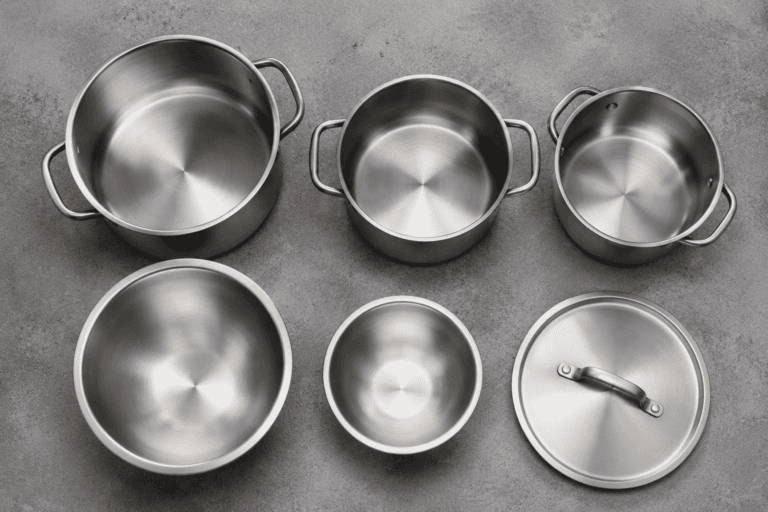
Hospitality and commercial kitchens represent one of the fastest-growing segments for bespoke stainless products. Custom countertops, cabinetry, pass-through shelving, and hood systems are specified to exact kitchen layouts, which off-the-shelf products cannot match.
2. How do material grades and finishes affect performance?
Choosing the wrong grade is the most common and costly mistake in custom metal fabrication. Grade 304 suits food-grade applications, Grade 316 adds molybdenum for marine and chemical resistance, and ferritic Grade 409 handles automotive exhaust heat at a lower cost.
The table below maps grades to their primary use cases and key properties.
| Grade | Primary use case | Key property | Typical finish |
|---|---|---|---|
| 304 | Food processing, kitchenware | Corrosion resistance, hygienic surface | #4 brushed or mirror |
| 316 | Marine, pharmaceutical, chemical | Molybdenum for chloride resistance | Electropolished |
| 409 | Automotive exhaust systems | Heat resistance, lower cost | Mill or matte |
| 430 | Appliance panels, decorative trim | Moderate corrosion resistance | Brushed |
Over-specifying Grade 316 where 304 suffices adds cost without any functional gain. Match the grade to the actual operating environment, not to a conservative worst-case assumption.
Finish selection is equally consequential. A #4 brushed finish on a food-contact surface resists scratching and hides minor marks. An electropolished finish on pharmaceutical equipment reduces surface roughness to near-zero, which limits bacterial adhesion. You can find a detailed breakdown of finish options in this guide to stainless kitchenware finishes.
Specifying finishes and tolerances at the quoting stage prevents expensive post-production corrections. Define both before you send a request for quote.
Pro Tip: If your application is indoors, temperature-stable, and not exposed to chlorides or acids, Grade 304 covers the requirement. Reserve 316 for outdoor coastal installations, chemical contact, or pharmaceutical-grade environments.
In brief Custom stainless steel performance starts with matching grade to environment: Grade 304 for food and indoor use, Grade 316 (with molybdenum) for marine, chemical, and pharmaceutical exposure, and ferritic Grade 409 for automotive exhaust heat. Over-specifying 316 where 304 suffices adds cost without functional gain, and finish — from #4 brushed to electropolished — must be defined at the quoting stage to avoid post-production corrections.
3. What fabrication techniques enable bespoke stainless designs?
Custom stainless solutions require a defined fabrication sequence. Each step affects dimensional accuracy, surface quality, and lead time.
- Laser cutting produces intricate profiles and tight tolerances from flat sheet stock. It handles complex geometries that stamping dies cannot justify for low-volume runs.
- Perforated sheet fabrication requires designing hole patterns around airflow, structural load, and acoustic requirements before cutting begins. Hole pattern and open area directly affect sheet strength, so functional requirements must drive the design, not aesthetics alone.
- Robotic welding and forming delivers consistent bead quality and repeatable bend angles across high-volume production runs. Weld quality in stainless steel directly affects both structural integrity and corrosion resistance.
- Secondary operations including deburring, hardware insertion, and powder coating complete the part within a single facility. In-house secondary operations reduce cross-contamination risk and eliminate the delays that come with shipping parts between vendors.
- Design for Manufacturability (DFM) review is a structured check that identifies bend radius violations, hole proximity issues, and material thickness conflicts before production starts. DFM reviews prevent fabrication constraints from surfacing mid-run, which is where they cost the most to fix.
Custom fabrication quotes typically return within 24–48 hours from the point of design submission. That timeline assumes a complete specification package is submitted upfront.
Pro Tip: Submit CAD files, material grade, surface finish requirements, and operating environment details in your first inquiry. Complete packages cut DFM iterations and compress lead times significantly.
In brief Bespoke stainless designs move through a defined fabrication sequence — laser cutting, perforated sheet fabrication, robotic welding and forming, secondary operations, and a Design for Manufacturability (DFM) review — with each step controlling dimensional accuracy, surface quality, and lead time. Complete specification packages return custom quotes within 24 to 48 hours and cut the DFM iterations that add most to timeline and cost.
4. Specialized applications in healthcare, hospitality, and foodservice
These three sectors share a common requirement: surfaces that are easy to clean, resistant to chemical disinfectants, and durable under daily operational stress. Custom stainless steel products meet all three criteria when fabricated correctly.
Healthcare environments
Hospital-grade stainless products include surgical tables, instrument trays, IV pole bases, and mobile trolleys. These items must withstand repeated sterilization cycles using steam, chemical agents, or UV exposure. Welded joints must be fully continuous with no crevices where pathogens can accumulate. The food-safe stainless steel buyer’s guide covers the surface and grade criteria that apply equally to medical environments.
Commercial kitchens and foodservice
Custom countertops, prep tables, and under-counter cabinetry are specified to the exact footprint of a kitchen layout. Standard catalog sizes rarely fit the spatial constraints of a commercial kitchen. Bespoke fabrication solves this directly. Sanitary finishes on food-contact surfaces must comply with NSF International standards, which require smooth, non-porous surfaces with no open seams.
Hospitality fixtures
Hotels and restaurants use custom stainless fixtures for bar tops, buffet stations, display shelving, and back-of-house storage. These pieces combine functional durability with a visual finish that matches the venue’s design language. A mirror-polished bar top and a brushed-finish prep counter both start from the same raw material. The fabrication path determines the final result.
Including CAD files, material grades, and load requirements upfront in your design package accelerates DFM and reduces back-and-forth with your fabricator. This matters most in hospitality projects where installation deadlines are fixed.
5. How vertically integrated manufacturers improve outcomes
Vertically integrated manufacturers manage design through finishing within a single facility. That structure eliminates vendor handoffs, which are the primary source of tolerance drift and timeline slippage in custom fabrication projects.
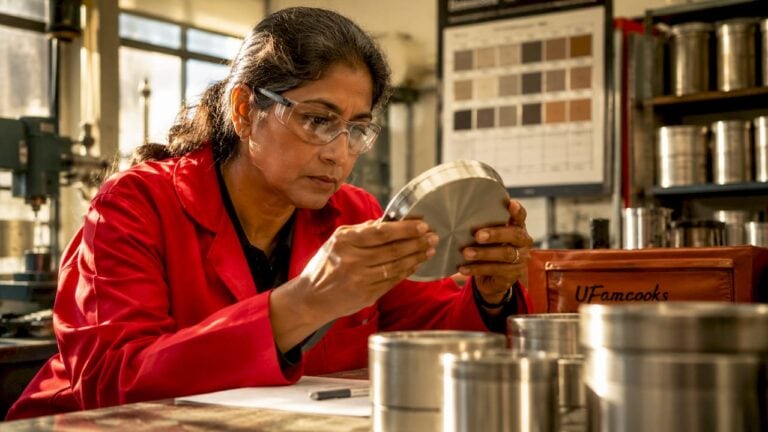
When a single manufacturer handles laser cutting, forming, welding, and finishing, every operation shares the same quality standard. There is no gap between what one vendor produces and what the next vendor expects to receive. UFamcooks operates on this model for stainless steel kitchenware, managing OEM and ODM production from design through packaging under one roof.
The practical benefit for manufacturers and designers is fewer surprises. You submit a specification, receive a DFM review, and track production through a single point of contact. That structure also makes it easier to manage urgent orders, because there is no external vendor to coordinate.
Key Takeaways
Custom stainless steel product selection requires matching grade, finish, and fabrication method to the specific operating environment before production begins.
| Point | Details |
|---|---|
| Grade determines suitability | Use 304 for food and indoor use; reserve 316 for marine, chemical, or pharmaceutical environments. |
| Finish affects function | Specify surface finish at the quoting stage to avoid costly post-production corrections. |
| DFM review prevents rework | Submit complete CAD and specification packages upfront to reduce design iterations and compress lead times. |
| Vertical integration reduces risk | Single-source manufacturers eliminate tolerance gaps and vendor handoff delays. |
| Sector requirements differ | Healthcare, foodservice, and hospitality each have distinct hygiene, load, and finish standards that drive fabrication decisions. |
What I’ve learned from specifying custom stainless projects
The single most common mistake I see from manufacturers and designers entering a custom stainless project is treating material selection as a formality. They default to Grade 316 because it sounds premium, then wonder why the quote comes back 30% higher than expected. Grade 316 is the right call for a pharmaceutical mixing vessel or a coastal marine fitting. It is the wrong call for an indoor prep counter or a decorative architectural panel.
The second mistake is submitting incomplete specifications. A fabricator cannot give you an accurate quote or a reliable DFM review without knowing the operating environment, the expected load, the required finish, and the tolerance stack. Every missing detail becomes a question, and every question adds a day to your timeline.
What actually works is treating the specification document as the most important deliverable in the project. Get the stainless steel grade classification right first. Then define the finish. Then submit the CAD. Fabricators who receive complete packages return quotes faster, flag fewer issues, and produce parts that match the design intent on the first run.
Partnering with a vertically integrated manufacturer compounds these benefits. When design, fabrication, and finishing happen under one roof, the communication chain is short and accountability is clear. That is the structure UFamcooks uses, and it is the structure I recommend to any team managing complex or time-sensitive custom orders.
— Jason
UFamcooks custom stainless kitchenware for OEM and ODM projects
UFamcooks manufactures custom stainless steel kitchenware directly from its factory, removing middleman costs and giving kitchenware brands, wholesalers, and importers direct access to OEM and ODM production. Every project goes through a multi-stage quality control process, from raw material inspection through final packaging. The factory handles full customization, including product design, surface finish, branding, and packaging configuration. Clients working on large or urgent orders benefit from proactive delivery scheduling and a single point of contact throughout production. Browse the full range of custom kitchenware products or contact UFamcooks directly to discuss your OEM and ODM manufacturing requirements.
FAQ
What is the best stainless steel grade for food-grade products?
Grade 304 is the standard choice for food-grade stainless steel products. It provides corrosion resistance and a hygienic surface suitable for most food processing and kitchenware applications.
How do I choose between Grade 304 and Grade 316?
Use Grade 304 for indoor, food-contact, and general-purpose applications. Choose Grade 316 only when the product will be exposed to chlorides, marine environments, or aggressive chemicals.
What fabrication method works best for complex stainless steel shapes?
Laser cutting is the most effective method for intricate profiles and tight tolerances in low-to-medium volume custom runs. It eliminates the tooling cost of stamping dies for complex geometries.
Why does a DFM review matter for custom stainless projects?
A DFM review identifies bend radius violations, hole proximity issues, and material conflicts before production starts. Catching these problems early prevents mid-run corrections, which are the most expensive type of change.
What information should I include in a custom stainless steel quote request?
Submit CAD files, the required material grade, surface finish specification, operating environment details, and load requirements. Complete packages return accurate quotes faster and reduce design iterations.
Recommended
- How Custom Stainless Steel Alloy Works for Engineers
- Stainless Steel Cookware Customization Options: 2026 Guide
- Stainless Steel Grade Classification: A Technical Guide
Spec your grade, finish & fabrication
Send your CAD, grade, and operating environment — get a structured quote in 24–48 hours.
UFamcooks is a vertically integrated factory in Jiangmen, Guangdong: 304 / 316 food-grade stainless, laser cutting, robotic welding, in-house finishing, and DFM review under one roof — OEM and ODM from design through packaging. Tell us your use case, grade, and finish.
Request a Quote