
Cleaning Stainless Steel Pots Professionally: Expert Guide
Cleaning stainless steel pots professionally means removing food residue, mineral deposits, and discoloration without damaging the chromium oxide layer that protects the metal from corrosion.
Cleaning stainless steel pots professionally means removing food residue, mineral deposits, and discoloration without damaging the chromium oxide layer that protects the metal from corrosion. That protective layer is thin and invisible, but it is the reason stainless steel resists rust and staining. The right approach combines targeted cleaning agents like baking soda, white vinegar, and oxalic acid-based commercial polishes with non-abrasive tools and careful technique. Get it right, and your pots hold their mirror finish and cook evenly for years. Get it wrong, and you accelerate pitting, dullness, and surface breakdown that no amount of scrubbing will fix.
Cleaning routine at a glance
- Burnt-on food: boil water in the pot for
5 min, then lift residue with a wooden spoon or soft sponge - Routine stains: baking soda paste at a
2:1ratio, left to sit15–20 min - Rainbow heat tint: white vinegar or lemon juice — cosmetic only, reverses almost immediately
- Heavy oxidation: oxalic acid polish (Bar Keepers Friend) restores mirror shine in about
15 min - Deep-clean cadence:
monthly, or every4–5 usesfor heavily used pots - Never use: bleach or chlorine cleaners, steel wool, abrasive pads, dishwasher cycles
- Always: scrub with the grain of the steel and towel-dry immediately after washing
What does cleaning stainless steel pots professionally actually require?
Professional pot cleaning is built on three principles: match the cleaning agent to the type of residue, protect the grain of the steel, and never use anything that attacks the chromium oxide surface. These principles apply equally in a home kitchen and a commercial one. The difference between a home cook and a professional chef is not the products they use. It is the consistency and precision of their technique.
The tools are straightforward. Soft sponges, microfiber cloths, and non-abrasive scrubbing pads handle the majority of cleaning tasks without scratching the surface. Steel wool and abrasive scouring pads are off the table entirely. They leave micro-scratches that trap food and oils, making every future cleaning session harder.
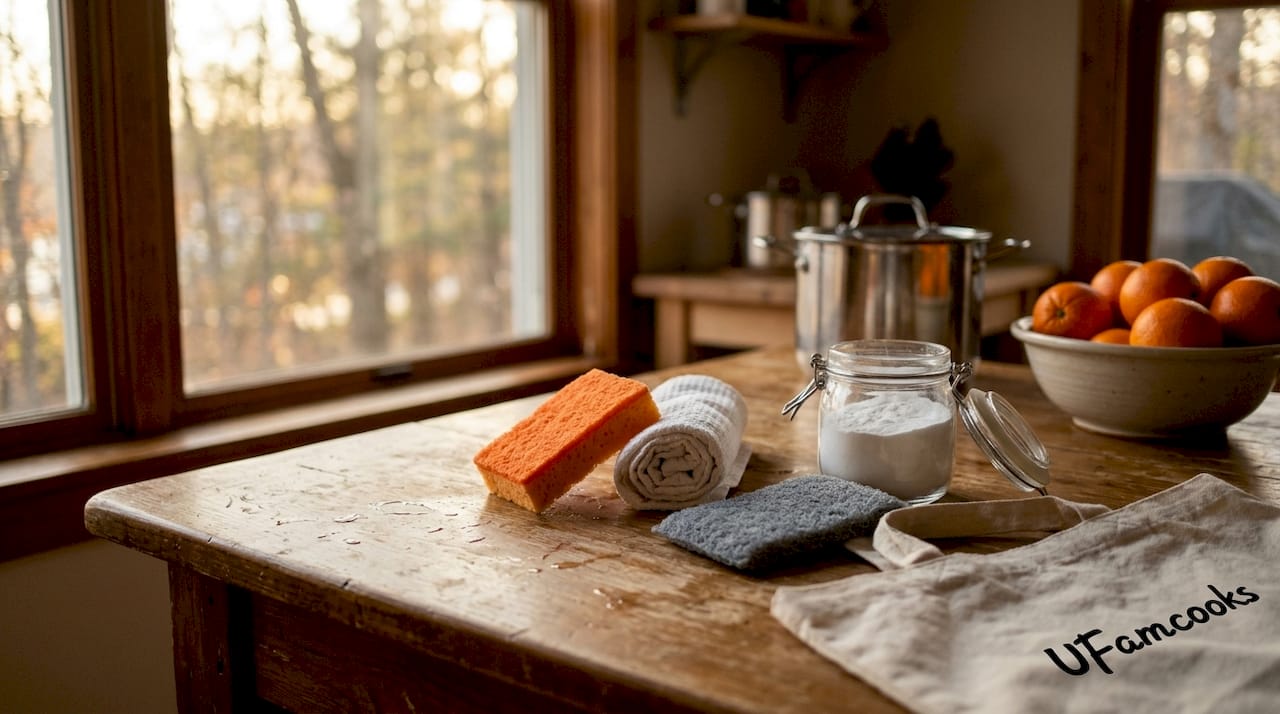
The cleaning agents each serve a specific purpose:
| Cleaning Agent | Best Use Case | Safety Note |
|---|---|---|
| Mild dish soap | Everyday grease and food residue | Safe for all stainless steel grades |
| Baking soda paste | Routine stains and light discoloration | Gentle abrasive; preserves chromium layer |
| White vinegar | Rainbow heat tint and mineral deposits | Acidic; rinse thoroughly after use |
| Lemon juice | Light discoloration and odor removal | Same acid action as vinegar; food-safe |
| Oxalic acid polish (e.g., Bar Keepers Friend) | Heavy oxidation and deep stains | Rinse completely; avoid prolonged contact |
| Bleach or chlorine cleaners | None | Bleach destroys the protective layer, causing irreversible pitting |
Bleach is the single biggest threat to stainless steel cookware. It chemically breaks down the chromium oxide surface, and that damage cannot be reversed. Avoid it entirely, along with any cleaner that lists chlorine as an active ingredient.
Spec noteBleach chemically breaks down the chromium oxide surface, and that damage cannot be reversed. Mild dish soap, baking soda paste, white vinegar, lemon juice, and oxalic acid polish cover every legitimate cleaning task without attacking the protective layer.
How do you remove stains and burnt food step by step?
The method you choose depends on what you are dealing with. Burnt food, mineral deposits, and rainbow discoloration each respond to different treatments. Using the wrong one wastes time and risks surface damage.
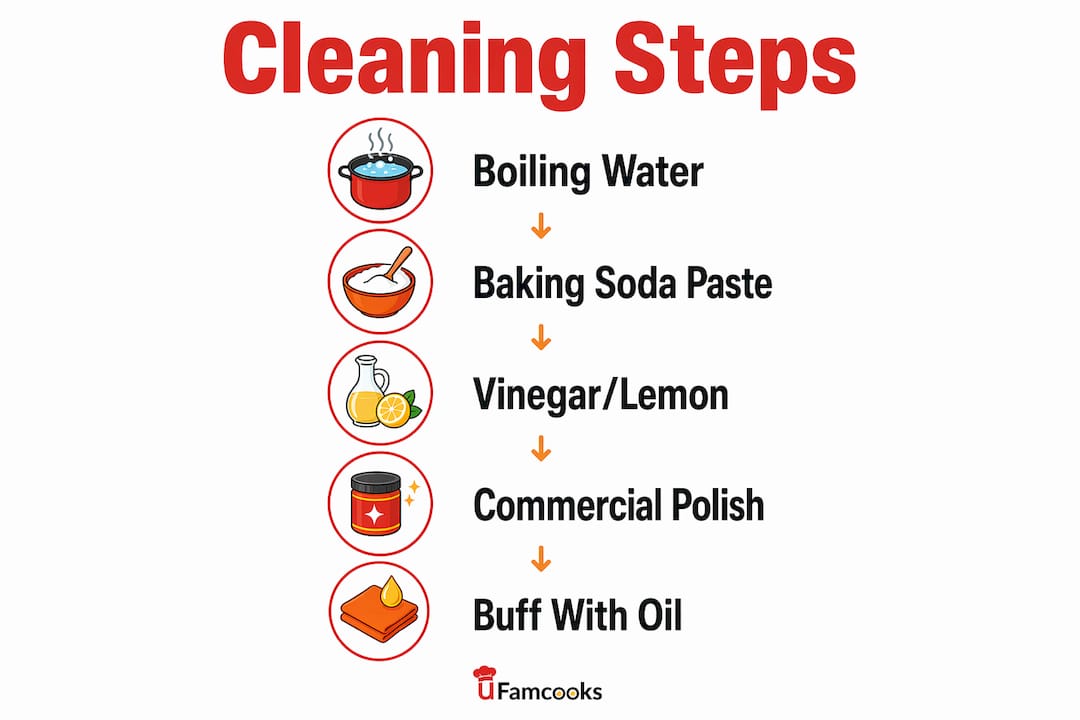
1. Burnt-on food: the boiling water method
Fill the pot with enough water to cover the burnt area and bring it to a boil. Boiling water for 5 minutes softens the bonds between burnt food and the steel surface. Once the water cools slightly, the residue lifts with a wooden spoon or soft sponge. This step requires no chemicals and protects the surface completely.
2. Routine stains: baking soda paste
Mix baking soda and water at a 2:1 ratio to form a thick paste. Apply it to the stained area and let it sit for 15–20 minutes. A baking soda paste removes routine stains without scratching or weakening the chromium layer. Scrub gently with a soft sponge, always following the direction of the steel’s grain.
3. Rainbow discoloration: vinegar or lemon
That iridescent rainbow sheen on the inside of your pot is heat tint. It looks alarming but is purely cosmetic. Heat tint reverses almost immediately with white vinegar or lemon juice applied to the affected area. Rub with a soft cloth, rinse thoroughly, and dry right away.
4. Heavy oxidation and deep stains: commercial polish
For serious discoloration or oxidation that baking soda cannot touch, an oxalic acid-based commercial polish is the professional standard. Bar Keepers Friend restores mirror shine in about 15 minutes and is the go-to product in restaurant kitchens. Apply with a damp cloth, work in circular motions or with the grain, and rinse completely.
Pro Tip: Always scrub with the grain of the steel, never against it. Scrubbing against the grain creates permanent micro-scratches that trap residue and make the surface harder to clean over time.
Method recapBoiling water for 5 minutes lifts burnt food without chemicals; a 2:1 baking soda paste left for 15–20 minutes handles routine stains; white vinegar or lemon juice reverses heat tint almost immediately; oxalic acid polish restores mirror shine in about 15 minutes.
How do you maintain stainless steel pots after cleaning?
Maintenance is where most cooks lose ground. A thorough cleaning session means little if daily habits undo the results within a week. The goal is to protect the surface finish between deep cleans and reduce how often heavy-duty restoration is needed.
The most damaging daily habit is the dishwasher. Hand washing is the professional standard for stainless steel cookware because dishwasher cycles use high heat and harsh detergents that dull and pit the surface over time. A quick hand wash with mild dish soap takes two minutes and preserves the finish for years longer.
Key maintenance habits that protect your pots:
- Dry immediately after washing. Water left to air-dry leaves white mineral spots from tap water deposits. A clean towel and 30 seconds of drying prevents this entirely.
- Deep clean on a schedule. Deep cleaning once a month, or every 4–5 uses for heavily used pots, prevents residue buildup that causes uneven heating and sticky spots.
- Apply food-safe mineral oil after deep cleaning. A thin layer of mineral oil on the exterior protects against fingerprints and moisture and keeps the mirror finish longer between polishing sessions. This is standard practice in professional kitchens.
- Never use steel wool or abrasive pads. They scratch the grain and create grooves that trap bacteria and food particles.
- Avoid soaking pots for extended periods. Prolonged water contact, especially with salty or acidic water, accelerates surface degradation.
Pro Tip: Apply a few drops of food-safe mineral oil to a microfiber cloth and buff the exterior of your pot after each deep clean. The oil forms a thin barrier that repels water and reduces how often you need to polish.
For more on cookware hygiene best practices, the principles of surface protection apply at every stage of cleaning and storage.
Care recapHand washing is the professional standard: dishwasher cycles use high heat and harsh detergents that dull and pit the surface over time. Towel-dry within seconds — water left to air-dry leaves white mineral spots from tap water deposits.
When should you repair or replace a stainless steel pot?
Not every problem is fixable. Knowing the difference between surface wear and structural damage saves money and prevents safety issues in the kitchen.
| Problem | Recommended Action |
|---|---|
| Light surface scratches | Polish with oxalic acid cleaner; follow the grain |
| Rainbow heat tint | Apply white vinegar or lemon juice; no scrubbing needed |
| White mineral spots | Dry immediately after washing; use vinegar to dissolve existing spots |
| Deep scratches or gouges | Cannot be reversed; monitor for bacterial buildup |
| Rust spots | Treat with baking soda paste or oxalic acid polish; if rust returns, replace |
| Warping or uneven base | Minor warping may self-correct on flat heat; severe warping causes uneven cooking and requires replacement |
| Layer separation (delamination) | Replace immediately; compromised structure affects heat distribution and food safety |
Deep scratches and warping are the two most common reasons to replace a pot rather than repair it. Warping causes hot spots that burn food unevenly and can damage induction cooktops. Delamination, where the bonded layers of a multi-ply pot begin to separate, is a structural failure. No cleaning method addresses it.
Extending the life of a pot through proper stainless steel pot maintenance also has an environmental benefit. Manufacturing new cookware consumes significant energy and raw materials. A well-maintained pot that lasts 20 years instead of 5 reduces that footprint substantially. The best way to clean stainless steel is the way that makes it last.
Key Takeaways
The most effective approach to cleaning stainless steel pots professionally combines the right agent for each residue type, consistent grain-direction scrubbing, and immediate drying after every wash.
| Point | Details |
|---|---|
| Match agent to residue | Use boiling water for burnt food, baking soda for stains, and vinegar for heat tint. |
| Never use bleach | Chlorine-based cleaners permanently destroy the chromium oxide protective layer. |
| Scrub with the grain | Scrubbing against the grain creates micro-scratches that trap food and degrade the finish. |
| Dry immediately | Air-drying causes white mineral spots; towel-dry within seconds of rinsing. |
| Deep clean monthly | Schedule deep cleans every 4–5 uses or once a month to prevent residue buildup and uneven heating. |
What I’ve learned after years of watching pots get ruined the wrong way
The most common mistake I see is not using the wrong product. It is using the right product at the wrong stage. Cooks reach for Bar Keepers Friend when a pot just needs a five-minute boil and a wipe. That over-reliance on heavy-duty polish accelerates surface wear unnecessarily. The professional approach is to start gentle and escalate only when the gentler method fails.
The second thing I have noticed is that people underestimate drying. They wash the pot correctly, use the right sponge, scrub with the grain, and then leave it in the drying rack. That last step undoes a lot of good work. Mineral spots from tap water are not just cosmetic. They build up over time and create a rough surface that holds onto food residue more stubbornly with each use.
Routine is the real secret. A pot that gets a proper hand wash, an immediate dry, and a monthly baking soda treatment rarely needs aggressive restoration. The cooks who spend 30 minutes scrubbing a pot back to life are usually the ones who skipped the two-minute dry for six months. Investing in a good microfiber cloth and a bottle of food-safe mineral oil costs almost nothing. The payoff is a pot that looks and performs like new for a decade or more.
— Jason
UFamcooks cookware built to handle professional cleaning routines
Cookware that holds up to professional cleaning starts with the right steel grade and construction. UFamcooks manufactures stainless steel pots and cookware built for exactly the kind of rigorous maintenance this guide covers. Their factory-direct model means you get commercial-grade quality without the markup, whether you are stocking a home kitchen or sourcing for a wholesale brand. Understanding why stainless steel grade matters for long-term durability and cleanability is the foundation of any smart cookware purchase. UFamcooks offers full OEM and ODM customization, so the finish, gauge, and construction match your specific performance and maintenance requirements.
FAQ
What is the best way to clean stainless steel pots?
The best method matches the cleaning agent to the residue type. Use boiling water for burnt food, a baking soda paste for routine stains, and white vinegar for rainbow discoloration.
Can you put stainless steel pots in the dishwasher?
Hand washing is strongly recommended. Dishwasher heat and detergents dull the surface and damage the chromium oxide layer over time, shortening the pot’s lifespan significantly. Read more about dishwasher risks for stainless steel cookware.
How do you remove rainbow discoloration from stainless steel?
Rainbow heat tint is a harmless oxidation layer that disappears almost immediately when treated with white vinegar or lemon juice applied with a soft cloth.
How often should you deep clean stainless steel pots?
Deep cleaning is recommended once a month or every 4–5 uses for heavily used pots. Regular deep cleans prevent residue buildup, sticky spots, and uneven heating.
Does mineral oil actually protect stainless steel cookware?
A thin layer of food-safe mineral oil applied after deep cleaning protects the exterior against fingerprints and moisture, extending the mirror finish between polishing sessions. It is a standard practice in professional kitchens.
Recommended
- Stainless Steel Cookware Hygiene Best Practices
- Stainless Steel Cooking Pot with Lid – Excellent Kitchenware Manufacturer & Supplier
- Can You Put Stainless Steel in a Dishwasher?
- Stainless Steel Cookware Pot with Steamer Set – Excellent Kitchenware Manufacturer & Supplier
OEM / ODM · Factory-direct
Source cookware built to handle professional cleaning routines
UFamcooks manufactures stainless steel pots and cookware factory-direct, with full OEM and ODM customization — finish, gauge, and construction matched to your performance and maintenance requirements.
Request a quote