
What Is Food Safe Stainless Steel? A Buyer’s Guide
Food safe stainless steel is defined by three factors working together: the correct alloy grade, a controlled surface finish at or below Ra 0.8 µm, and proper fabrication including passivation. Grade alone does not make steel safe for food contact. Surface condition and how the metal is processed determine whether it meets regulatory requirements in practice.
What is food safe stainless steel, and which grades qualify?
Food safe stainless steel means specific alloy grades plus correct surface condition and fabrication that comply with applicable food-contact regulations. The grade alone does not make steel safe for food contact. Surface finish and how the metal is processed matter just as much.
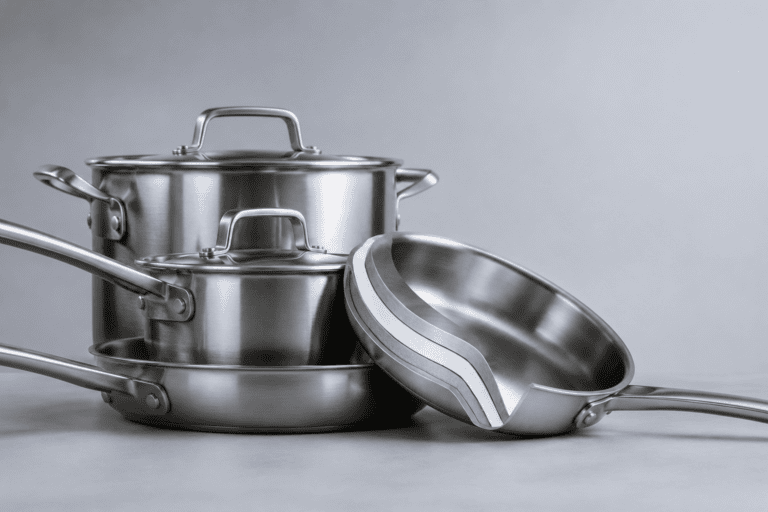
The two dominant food grade stainless steel grades are 304 and 316, both from the austenitic 300-series family. 304 stainless steel contains roughly 18% chromium and 8% nickel, which is why it is also called 18/8 stainless steel. That chromium content forms a passive oxide layer on the surface, protecting the metal from rust and chemical attack during food contact and sanitation. You will find 304 in the majority of chef grade stainless cookware, mixing bowls, prep tables, and food storage containers.

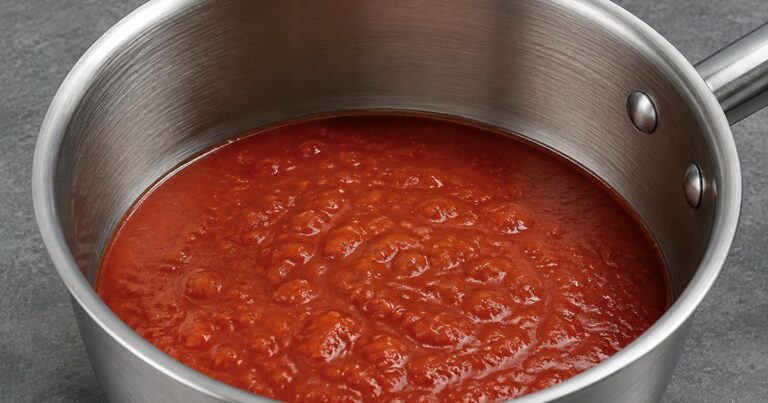
316 stainless steel adds molybdenum to the 304 formula. That addition significantly improves resistance to chloride-induced corrosion, which is the type of pitting damage caused by salt, acidic marinades, and the chlorine-based sanitizers common in commercial kitchens. 316 is specified for wet processing zones and direct chloride exposure environments, such as coastal seafood facilities or saline brine tanks. For most home and commercial kitchenware, 304 is sufficient. For food processing equipment in wet or acidic zones, 316 is the correct choice.
Not all stainless steel grades are food safe. Grade 201 substitutes manganese for nickel to cut costs, but it offers weaker corrosion resistance and is not suitable for food contact. Grade 303 contains added sulfur for machinability, which compromises its corrosion resistance and disqualifies it from food-contact applications.
| Grade | Key Composition | Best Use | Food Safe? |
|---|---|---|---|
| 304 | 18% Cr, 8% Ni | General food contact, cookware, prep surfaces | Yes |
| 316 | 18% Cr, 10% Ni, 2% Mo | Wet zones, chloride environments, acidic processing | Yes |
| 201 | 16% Cr, 4% Ni, Mn | Decorative, non-food applications | No |
| 303 | 18% Cr, 8% Ni, S added | Machined parts, non-food contact | No |
How does surface finish affect food safety?
Alloy grade is the starting point, but hygienic risk is also driven by surface finish and fabrication quality. A rough or porous surface traps food particles and bacteria in microscopic crevices that cleaning chemicals cannot reach. This is why surface roughness is a regulated parameter, not just an aesthetic choice.

The standard for food-contact surfaces is a surface roughness of Ra ≤ 0.8 µm. Ra is the average roughness measured in micrometers. Any surface rougher than 0.8 µm creates conditions where bacteria can survive standard sanitation cycles. That threshold is the benchmark used by hygienic design organizations including 3-A Sanitary Standards and EHEDG (European Hygienic Engineering and Design Group).
Common food-contact surface finishes include:
- Polished (2B or BA mill finish): The standard starting point for food-grade sheet. Smooth, consistent, and easy to clean.
- Electropolished: An electrochemical process that removes the outermost metal layer, producing a surface smoother than mechanical polishing. Electropolishing also removes embedded iron particles that could initiate corrosion.
- Brushed (No. 4 finish): Common on commercial kitchen equipment and cookware. Acceptable for food contact when the Ra value meets the 0.8 µm threshold.
Fabrication quality is equally critical. Welding creates heat-affected zones that can disrupt the passive chromium oxide layer. Poor welds leave pits, crevices, and discoloration that harbor bacteria and resist cleaning. Post-fabrication passivation, a chemical treatment that restores and strengthens the passive layer, is a required step in hygienic fabrication. Insufficient finish control can render food safe alloys ineffective in preventing crevice corrosion or bacterial buildup.
For buyers sourcing custom pieces, Ufamcooks provides detailed guidance on surface finish selection and its impact on hygienic compliance.
What regulatory standards govern food safe stainless steel?
Food safe stainless steel compliance operates on two distinct levels: legal permission and third-party validation. Understanding the difference protects buyers from accepting incomplete certifications.
FDA 21 CFR (Code of Federal Regulations) defines which materials are legally permitted for food contact in the United States. FDA compliance means materials are legally permitted for food contact. The FDA does not issue certificates to individual products or manufacturers. It sets the legal baseline. If a supplier claims “FDA certified,” that phrasing is technically inaccurate. The correct term is “FDA compliant” or “meets FDA 21 CFR requirements.”
NSF/ANSI 51 fills the gap that FDA compliance leaves open. NSF tests finished components for material safety, cleanability, and sanitation performance under real-use conditions. An NSF/ANSI 51 mark on a product means an independent laboratory has verified it, not just that the manufacturer self-declares compliance.
The layered compliance approach works as follows:
- Correct alloy grade: 304 or 316 stainless steel for food contact applications.
- FDA 21 CFR compliance: Confirms the material is legally permitted for food contact in the US market.
- NSF/ANSI 51 certification: Third-party validation of the finished product’s material and sanitation performance.
- 3-A or EHEDG compliance: Hygienic design standards for food processing equipment, covering geometry, weld quality, and cleanability.
“FDA and NSF serve complementary but distinct roles in verifying food safe materials. FDA sets the legal floor; NSF validates that the finished product actually meets it in practice.”
Regulatory guidance
Buyers sourcing for commercial food service or processing should require all four layers. Buyers choosing cookware for home use should look for NSF/ANSI 51 certification as the most practical verification available at the retail level.
How can you verify the quality of food grade stainless steel kitchenware?
Verification starts with documentation, not visual inspection. A mill test certificate (MTC) confirms the chemical composition and mechanical properties of the steel batch used. Without it, a grade claim is unverifiable. Vague “food grade” claims often fail audit verification precisely because this paperwork is missing.
Key documents and checks to request from any supplier:
- Mill test certificate (MTC): Confirms alloy grade, chemical composition, and heat number for full traceability.
- Surface finish report: States the Ra value of food-contact surfaces, confirming the ≤ 0.8 µm threshold is met.
- Passivation record: Documents that post-fabrication passivation was performed to restore the protective oxide layer.
- NSF/ANSI 51 certificate: Issued by NSF International for the specific finished product or component.
- Weld inspection records: Confirms weld quality meets hygienic design standards, with no crevices or porosity.
A supplier who cannot provide these documents is selling on trust rather than evidence. For importers and wholesalers, missing documentation creates audit exposure and potential product liability.
Common red flags in sourcing: steel labeled “18/10” without a grade designation (18/10 describes nickel content, not a formal grade), products claiming “food safe” without any certification reference, and unusually low pricing that suggests a lower-cost alloy like 201 has been substituted. Checking for NSF/ANSI 51 certification on finished products is the fastest single verification step available to buyers at any scale.
For a detailed walkthrough of what to look for when vetting cookware manufacturers, Ufamcooks has published a practical 2026 guide covering documentation, certifications, and fabrication quality checks.
Key takeaways
Food grade stainless steel requires the correct alloy grade, a surface finish at or below Ra 0.8 µm, proper fabrication including passivation, and third-party certification such as NSF/ANSI 51 to be genuinely food safe.
| Point | Details |
|---|---|
| Grade matters, but it’s not enough | 304 and 316 are food safe grades; surface finish and fabrication determine actual hygiene performance. |
| Surface roughness is regulated | Food-contact surfaces must meet Ra ≤ 0.8 µm to prevent bacterial harborage and pass sanitation. |
| FDA and NSF serve different roles | FDA sets legal permission; NSF/ANSI 51 provides third-party validation of finished product performance. |
| Documentation is non-negotiable | Mill test certificates, finish reports, and passivation records are required for verified compliance. |
| 316 beats 304 in wet or acidic zones | Specify 316 stainless steel wherever chloride exposure or wet processing conditions are present. |
The grade label is only half the story
I’ve reviewed a lot of kitchenware sourcing decisions over the years, and the most common mistake I see is treating “food grade stainless steel” as a binary pass/fail label. Buyers confirm the grade is 304 or 316, check that box, and move on. The fabrication quality and surface finish get almost no scrutiny. That’s where the real risk lives.
A perfectly specified 316 pan with rough welds and no passivation is less hygienic than a well-fabricated 304 pan with an electropolished interior. The alloy chemistry gives you corrosion resistance. The surface and fabrication give you cleanability. You need both, and they come from different parts of the manufacturing process.
The regulatory picture is also shifting. NSF/ANSI 51 certification is increasingly expected by commercial buyers and retail chains, not just food processing facilities. Suppliers who only offer FDA compliance language without third-party certification are falling behind the standard that serious buyers now require. The gap between “legally permitted” and “independently verified” is exactly where product liability claims originate.
My practical advice: specify the grade, specify the Ra value, require the MTC, and only accept NSF/ANSI 51 certification as proof of finished product compliance. If a manufacturer cannot deliver all four, find one who can. The documentation burden is not excessive. It’s the minimum that a credible food-contact product should carry.
— Jason
Ufamcooks’ food safe stainless steel kitchenware
Ufamcooks manufactures stainless steel kitchenware built to food safety standards from the alloy up. Every product line uses verified 304 or 316 stainless steel with documented surface finishes and full batch traceability. Ufamcooks supports kitchenware brands, wholesalers, and importers with OEM and ODM services that include complete compliance documentation, from mill test certificates to finish reports. For buyers who need certified, audit-ready products without the sourcing risk, the full product catalog covers cookware, prep equipment, and storage solutions built to meet commercial and retail food safety requirements. Contact Ufamcooks directly to discuss grade specifications, certification requirements, and custom fabrication options.
FAQ
What is the difference between food safe and food grade stainless steel?
The two terms describe the same concept. “Food grade stainless steel” is the standard industry term, while “food safe” is a broader descriptor. Both refer to alloys like 304 and 316 that meet regulatory and hygienic requirements for direct food contact.
Is all stainless steel safe for food contact?
No. Grades like 201 and 303 lack the corrosion resistance required for food contact and are not considered food safe. Only austenitic grades such as 304 and 316, with proper surface finish and fabrication, qualify as food grade stainless steel.
What does NSF/ANSI 51 certification mean for cookware?
NSF/ANSI 51 is a third-party certification that validates a finished product’s materials and sanitation performance for food equipment use. It goes beyond FDA compliance by independently testing the actual product rather than relying on self-declared material claims.
When should I choose 316 over 304 stainless steel?
Specify 316 stainless steel for wet processing zones, saline environments, or any application with regular chloride exposure. For standard cookware and dry food contact surfaces, 304 provides sufficient corrosion resistance at a lower cost.
What documents should I request to verify food safe stainless steel?
Request a mill test certificate confirming the alloy grade, a surface finish report showing Ra ≤ 0.8 µm, a passivation record, and an NSF/ANSI 51 certificate for the finished product. These four documents together confirm genuine food grade compliance.
Recommended
- Can You Microwave Stainless Steel? A Safety Guide
- Stainless Kitchenware Food Safety Compliance Import Guide
- Blog — Excellent Kitchenware Manufacturer & Supplier
Source with compliance documentation
Get 304 and 316 kitchenware with full food safety paperwork, batch-level traceability, and NSF/ANSI 51 on every program.
Mill test certificates, surface finish reports, passivation records, and weld inspection built into every OEM and ODM order. Factory direct, no middleman markup.