
Materials & Compliance
PFAS-Free Cookware: PTFE, PFOA & Stainless Steel Explained
Understand PFAS-free cookware labels, PTFE and PFOA differences, 4 state rules, and the documents buyers need for uncoated stainless steel and ceramic coatings.
PFAS-free cookware and PFOA-free cookware are different claims. PTFE belongs to the PFAS family; PFOA is another member, formerly used in nonstick production. A PFOA-free pan can therefore still have a PTFE coating. Uncoated stainless steel avoids that fluoropolymer cooking layer, but a claim about the complete product still needs evidence covering its materials and components.
For importers, the difference affects product specifications, packaging and sales destinations. A steel grade report and a coating declaration answer separate questions; neither replaces an assessment of the finished item. This guide explains what each document can establish, compares uncoated steel with ceramic coatings, and reviews four selected US state requirements checked on November 7, 2026.
Key takeaways
- PFOA-free does not establish PFAS-free.
- Specify the cooking surface and every relevant component.
- Correctly used PTFE and PFAS-free marketing involve different assessments.
- Minnesota’s cookware prohibition began in 2025; Washington requires reporting instead. Follow the linked agency guidance for scope and exceptions.
- Match each claim to supporting documents.
What do PFAS, PTFE and PFOA mean on cookware?
PFAS is a broad chemical family, PTFE is a fluoropolymer within it, and PFOA is a different substance. The OECD’s 2021 terminology report explains the structural definition used to organize this family. The three names should never be treated as interchangeable ingredients or equivalent label claims.
| Label or term | What it tells a buyer | What it does not establish |
|---|---|---|
| PFAS | A family of fluorinated substances, including fluoropolymers such as PTFE | Identical exposure or health effects for every member |
| PTFE cookware | The product uses a polytetrafluoroethylene surface or component | Whether its use is permitted in every destination market |
| PFOA-free | A claim concerning PFOA, which needs a defined basis | Absence of PTFE or other PFAS |
| PTFE and PFOA free cookware | A claim excluding two named substances | Absence of every other substance within the applicable PFAS definition |
| PFAS-free cookware | A broader claim requiring a clear definition and supporting evidence | Zero migration of every chemical, or universal product safety |
| Uncoated stainless steel | A metal surface without an applied coating, if confirmed by the specification | Composition of a lid seal, handle, exterior treatment or accessory |
When a supplier sends a PFOA test report, ask what the coating is actually made from. The report may accurately identify the analytes tested without addressing the main cooking-surface polymer. Review the material description alongside the laboratory result. A short list of non-detects is not a complete composition statement.
Keep the supplier’s exact declaration wording in your approval record. If the carton says PFAS-free but the declaration only addresses PFOA, resolve the mismatch before approving artwork. Review the retailer’s product-page wording just as closely as the physical label.
Is PTFE cookware unsafe when used as intended?
Germany’s BfR assessment of PTFE cookware says adverse health effects are not expected from proper use. It also warns that severe overheating, around 360°C and above, can produce hazardous gases. That figure describes a decomposition hazard; it is not a recommended cooking temperature.
The FDA’s explanation of authorized food-contact applications describes tightly bound, polymerized nonstick coatings with negligible PFAS migration into food. This assessment concerns the authorized use and how the coating is manufactured. It does not certify a particular finished pan or determine whether that pan can be sold under a state’s PFAS rules.
Follow the product’s temperature limits, avoid heating an empty nonstick pan, and use proper ventilation. Request the use instructions with the procurement sample, then check the promised oven, stovetop and cleaning uses against the coating supplier’s documentation. Instructions limiting use to low temperatures cannot support a catalogue promise of unrestricted high-heat cooking.
Separate the purchasing decisions: intended-use safety, the presence of PFAS, and permission to sell are three distinct checks. A statement about low migration cannot substitute for a destination-market ingredient restriction. Equally, a sales restriction does not establish that every meal cooked in an existing PTFE pan has caused harm.
Does uncoated stainless steel mean PFAS-free and non-toxic?
Uncoated stainless steel provides a cooking surface without a PTFE layer. Its corrosion resistance comes from a thin protective surface layer associated with chromium, as Health Canada explains. That naturally formed layer is different from an applied nonstick coating. However, a designation such as 304 identifies an alloy; it does not describe every finish applied to the product.
Avoid the stronger promise that stainless steel never releases metals. A peer-reviewed study by Kamerud and colleagues measured nickel and chromium transfer into tomato sauce under specified cooking conditions. Results varied with material, cooking duration and previous use. Those experiments support careful, qualified language; they do not predict the exposure from every pan or meal.
Nickel also matters independently of PFAS. Health Canada advises people allergic to nickel to avoid cookware containing it. A PFAS-free statement therefore cannot answer every user’s material-suitability question. For buyers, intended use, food-contact documentation and accurate care instructions remain necessary even when no fluoropolymer coating is specified.
Our 201, 304 and 316 cookware comparison covers alloy selection. Specify the body grade separately from the food-contact finish, then verify both against the approved sample.
PFAS-free cookware: uncoated steel and ceramic coatings
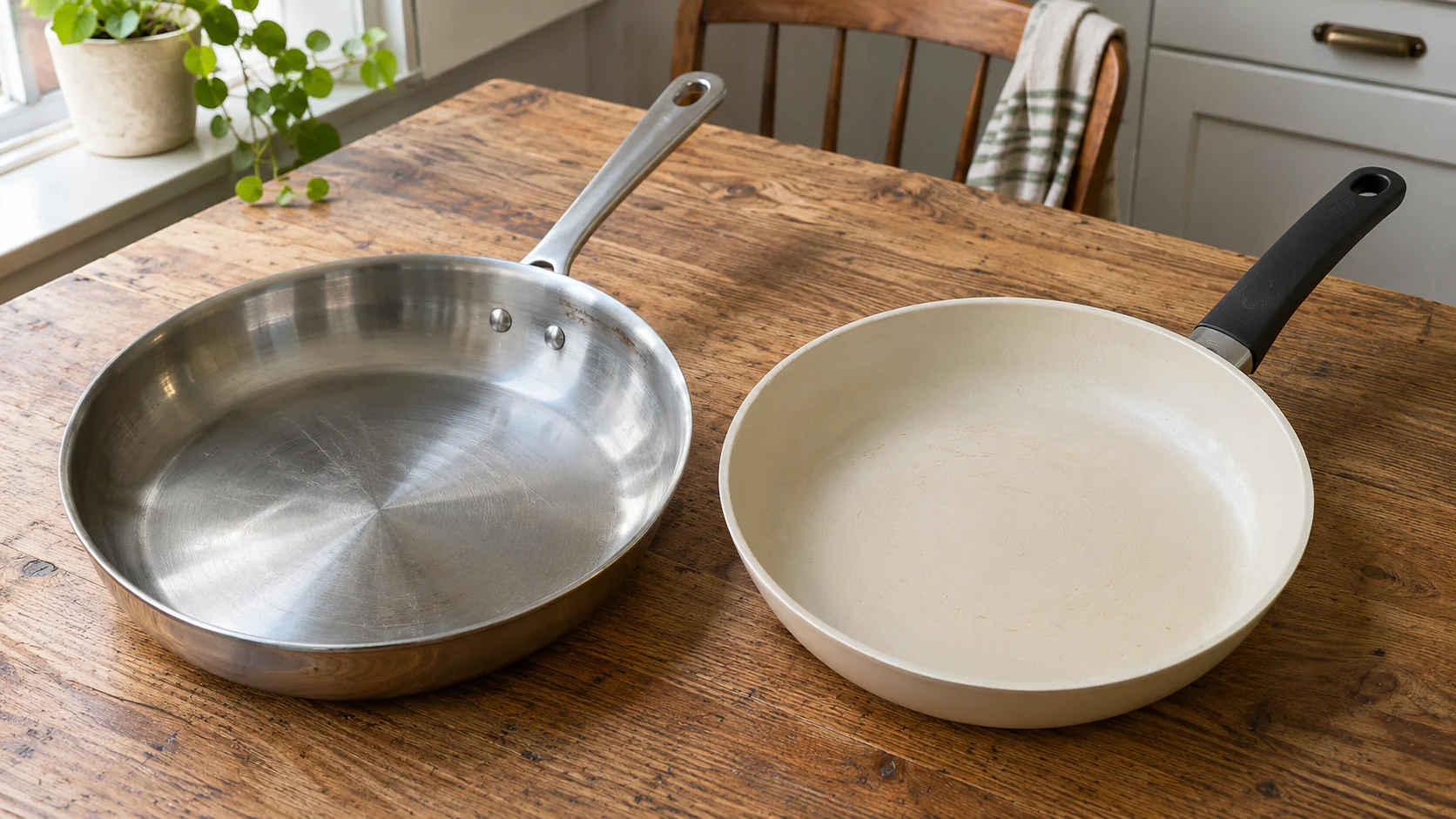
Some ceramic nonstick systems use sol-gel technology and are formulated without intentionally added PFAS. ILAG’s XERADUR 3 ceramic coating is one named example. The manufacturer’s declaration applies to that specific system. A ceramic label on an unspecified pan does not establish the formulation of its complete coating stack.
| Purchase question | Uncoated stainless steel | Ceramic-coated cookware |
|---|---|---|
| What touches food? | The specified metal surface | An applied coating over a substrate |
| How is the surface documented? | Alloy, finish and relevant food-contact evidence | Named coating system, substrate and food-contact evidence |
| What needs performance review? | Food release, cleaning, corrosion, construction and heat behavior | Food release plus coating adhesion and resistance to expected use |
| What supports a PFAS claim? | Defined materials and component declarations, with appropriate testing | Formulation and component declarations, with appropriate testing |
| Can lifespan be assumed? | No; use conditions and construction matter | No; coating system and use conditions matter |
Coating supplier PPG describes abrasion, thermal-shock and chemical-resistance tests for evaluating nonstick performance. This provides useful test categories, although it is a supplier’s account of its own products. It does not establish a universal service life for ceramic cookware or a fixed replacement advantage for stainless steel.
For a purchasing trial, compare samples with the same food, utensils, heat settings and cleaning procedure. Before testing, define acceptable results for the finish and food release. Record completed use cycles, cleaning effort and reasons for rejecting a sample. Base the cost comparison on observed replacement rates rather than assumed years of service.
For the wider material choice, see our ceramic versus stainless steel cookware guide.
Which US state requirements affect PFAS cookware?
The four examples below show why importers need a destination-specific review. Minnesota and Maine have cookware sales prohibitions with defined scope and exceptions. Washington’s relevant rule requires reporting, while California AB1200 addresses disclosures and claims. This is a selected comparison checked November 7, 2026, not a complete US compliance inventory.
| State | Requirement and timing | What the buyer should verify |
|---|---|---|
| Minnesota | Covered cookware with intentionally added PFAS has been prohibited since January 1, 2025. | Product scope and the current electronic/internal-component exceptions. MPCA guidance |
| Maine | The cookware prohibition began January 1, 2026. | Food-contact surfaces, applicable exemptions and treatment of internal components. Maine DEP guidance |
| Washington | Track covered cookware and kitchen supplies from January 1, 2026; first reports are due January 31, 2027. | Reporting responsibility and product data. This cookware provision is a reporting requirement. Ecology adopted rule |
| California | AB1200 website disclosures began January 1, 2023; package disclosures began January 1, 2024. | Applicable listed chemicals in handles/food-contact surfaces and restrictions on chemical-free claims. Attorney General advisory |
For Maine, current guidance distinguishes food-contact surfaces from products whose only intentionally added PFAS are in non-food-contact internal components. Minnesota also describes component exceptions. Do not assume a single description of a lid, gasket or appliance establishes the same outcome in both states. Check the complete product against the applicable agency’s current guidance.
Before shipment, confirm the current rule and identify the responsible manufacturer or importer. Record the destination review alongside the purchase order.
What evidence should buyers request for PFAS-free cookware?
Build a product-level evidence file before approving a PFAS-free claim. Start with the exact SKU and sample version. The procurement checklist below separates composition, intended use and claim substantiation to make missing evidence easier to spot; it is not a universal statutory document list.
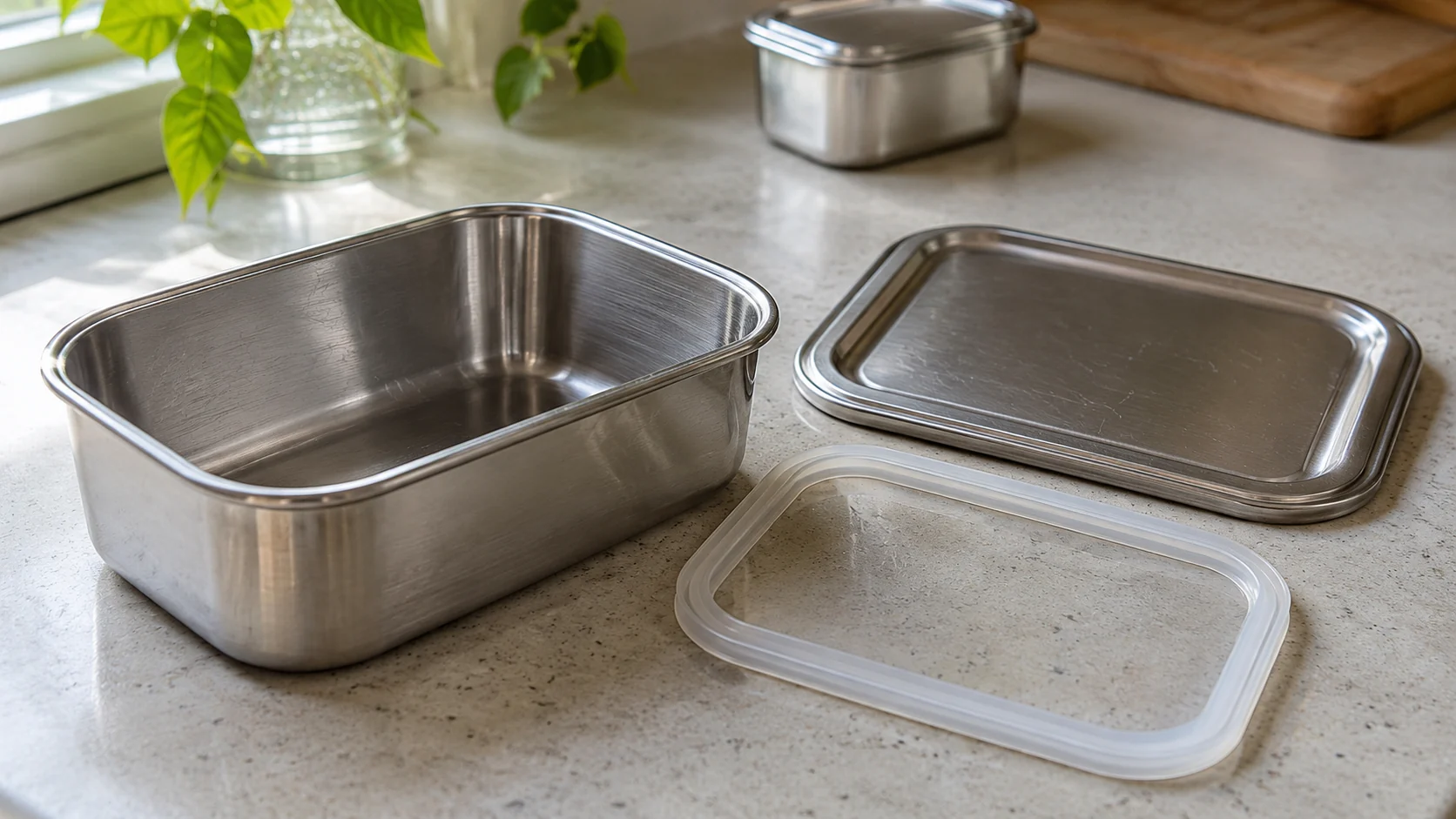
- Product and component identity. Document the SKU, drawing revision, supplier and relevant parts: the body, cooking surface, lid, seals, handles, exterior finishes and supplied accessories.
- Surface specification. State whether each relevant surface is uncoated or treated. For coated products, identify the coating supplier and system instead of relying on words such as stone, granite or ceramic.
- A scoped declaration. Ask the supplier what its PFAS statement covers, which definition it uses and whether it addresses intentionally added substances. Keep the signed declaration linked to the approved product.
- Applicable food-contact evidence. Match each report to the material, sample, intended food contact and use conditions. A PFAS declaration does not replace the rest of the food-contact assessment.
- An appropriate testing plan. Ask a competent laboratory to specify methods suited to the material and claim. Record the sampled components, analytes, detection limits and limitations. A PFOA-only result cannot establish absence of the entire PFAS family.
- Use and care instructions. Check heat, oven, utensil and cleaning limits against the intended application. Include lids and seals when evaluating an assembled product’s limits.
- Traceability and change control. Keep sample approval, lot identification and document versions together. Require notification before a coating, gasket, finish or material supplier changes.
Consider a hypothetical lunch-box order. The supplier provides a steel certificate but no documentation for the removable gasket. Mark the gasket as unresolved and request its formulation, supplier reference and applicable test coverage before releasing packaging artwork. A component-by-component worksheet makes the missing evidence visible to purchasing, quality assurance and the graphic designer.
Use our kitchenware certification guide to organize the broader document review. For an uncoated steel baking-pan inquiry or stainless steel food-container inquiry, ask for confirmation of the exact finish and component specification. The links are starting points for a product inquiry; this article does not claim to have tested those SKUs.
Frequently asked questions
Does PFOA-free mean PFAS-free?
No. PFOA is one substance within the broader PFAS family, so a PFOA-free claim does not exclude PTFE or other PFAS. Check the complete surface formulation and the scope of the supporting documents. The OECD’s 2021 terminology framework explains why excluding one substance does not establish absence of the family.
Is all stainless steel cookware PTFE-free?
No. Stainless steel identifies the metal substrate, which a manufacturer can coat with a nonstick layer. To specify PTFE-free cookware, verify the surface system as well as the metal grade. This applies equally to 304 and 316 cookware, lids and accessories. A silver exterior does not identify the coating chemistry.
Is ceramic cookware always PFAS-free?
No universal conclusion follows from the word ceramic. Some identified sol-gel systems are supplied without intentionally added PFAS, but the statement must match the exact coating and finished product. Ask for the formulation declaration and component scope. Our comparison above explains how to evaluate ceramic coatings without assuming a fixed lifespan.
Is PFAS-free cookware automatically safe for everyone?
No. PFAS content is one aspect of material assessment. Food-contact suitability, intended use, construction and individual sensitivities still matter. For example, Health Canada advises people with nickel allergy to avoid nickel-containing cookware. A PFAS-free declaration cannot replace that separate suitability check or justify a universal non-toxic promise.
Can the same cookware file cover all four states?
A common product file can support several reviews, but each destination needs its own conclusion. Washington’s first reporting deadline is January 31, 2027; Minnesota and Maine already have relevant prohibitions. California’s disclosure rules ask a different question. Record the applicable requirement, responsible party and unresolved evidence for each market.
Request a documented cookware specification
For an OEM inquiry, send your destination markets, intended cooking or storage use, and proposed label wording. Specify whether the requirement covers the food-contact surface or the complete supplied set, and include drawings or a reference sample where available.
Request an uncoated stainless steel cookware specification. Confirm the sample, component list and evidence package before approving product claims or packaging artwork.
About the author: Jason Gan prepared this UFamcooks guide for buyers reviewing cookware materials and supplier documentation. The analysis draws on the linked public sources; it does not report in-house laboratory work. Contact UFamcooks with a sourcing question or correction.
Sources checked: November 7, 2026. The references linked alongside the relevant claims include OECD terminology, BfR and FDA assessments, Health Canada guidance, the Kamerud research paper, Minnesota MPCA, Maine DEP, Washington Ecology and California Attorney General guidance. ILAG and PPG are identified as commercially interested coating suppliers.
Image note: The four photographs are AI-generated illustrations, not factory records, tested product samples or proof of chemical composition.