
What Is a Non-Reactive Pan, Pot, or Bowl? A Buyer’s Glossary (2026)
A non-reactive pan is a pan whose cooking surface does not dissolve into acidic food.
A non-reactive pan is a pan whose cooking surface does not dissolve into acidic food. In practice that means stainless steel, vitreous enamel, glass, or an intact ceramic or nonstick coating. Uncoated aluminum, unlined copper, and bare cast iron are the reactive ones. They give up metal ions to lemon juice, vinegar, wine, and tomato.
Key Facts
- A non-reactive vessel is one whose food-contact surface does not exchange metal ions with acidic food. Stainless steel, vitreous enamel, and glass qualify; uncoated aluminum, unlined copper, and bare cast iron do not.
- The term is a kitchen convention, not a regulatory one. The US FDA Food Code (
4-101.14) names only copper, barring it from contact with food belowpH 6. - The magnet test does not measure reactivity. Per the British Stainless Steel Association, austenitic
304is nominally non-magnetic while ferritic430is magnetic, and both resist food acid. - Acidity that triggers it: lemon juice
pH 2.00–2.60, vinegar2.40–3.40, sauerkraut3.30–3.60, tomatoes4.30–4.90. - Auditable alternative to the word:
NSF/ANSI 51Food Equipment Materials, food zone. - Vessels defined here: pan, saucepan, skillet, pot, bowl, container.
- Our food-contact lines:
304and316L, MOQ500–5,000pieces per SKU, LFGB / FDA / ISO 9001 documentation.
Recipes use the phrase constantly and define it almost never. This glossary does the opposite. Below, every vessel a buyer actually asks about (pan, saucepan, skillet, pot, bowl, container) gets a definition, the materials that qualify, and the failure mode that catches people out. We manufacture 304 and 316L stainless kitchenware for OEM buyers in 30+ countries, so the last section covers what to write on a purchase specification, where “non-reactive” is not a word your QC team can audit. For the underlying chemistry and food-safety data, see our professional guide to non-reactive cookware and food safety.
What Does “Non-Reactive” Mean in Cookware?
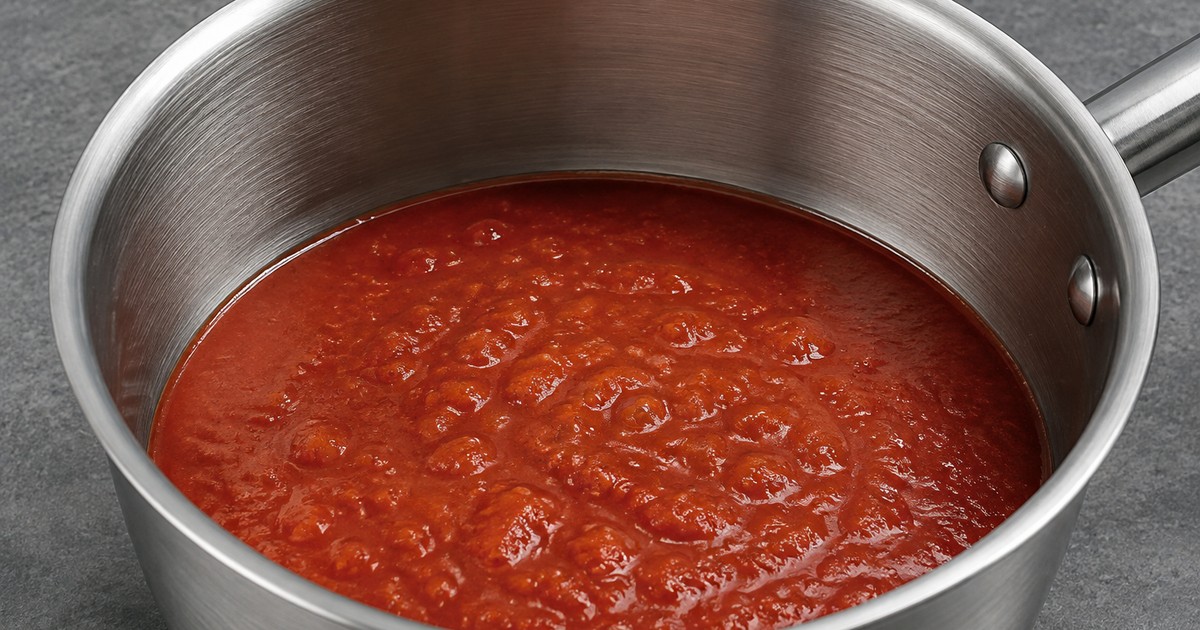
Non-reactive means the surface touching your food is chemically inert to food acids. It’s a description of one property, not a quality tier. A $15 stainless bowl and a $400 clad saucepan are equally non-reactive, because both present the same passive chromium-oxide layer to the food.
In brief “Non-reactive” has no regulatory definition. The one metal a food code names is copper: US FDA Food Code 4-101.14 bars copper and brass from contact with food below pH 6, and Clemson University Extension puts tomatoes at pH 4.30 to 4.90, vinegar at 2.40 to 3.40.
How acidic is ordinary food? Clemson University Extension’s pH table puts lemon juice at 2.00–2.60, vinegar at 2.40–3.40, sauerkraut at 3.30–3.60, and tomatoes at 4.30–4.90. Those are everyday ingredients, and every one of them sits far enough below neutral to pull ions out of a reactive metal.
Regulators draw the line for exactly one metal. The FDA Food Code, section 4-101.14, states that copper and copper alloys such as brass “may not be used in contact with a food that has a pH below 6 such as vinegar, fruit juice, or wine.” No parallel rule exists for stainless steel, enamel, or glass. That asymmetry is the closest thing to an official definition the term has.
So why does the word survive? Because it’s a shortcut. A recipe writer can’t list every alloy, so “use a non-reactive pan” stands in for “don’t ruin this with aluminum.” The shortcut works in a kitchen. It stops working the moment someone has to buy 5,000 units against it. The material-by-material breakdown behind the label is covered in our non-reactive vs reactive cookware comparison.
What Is a Non-Reactive Pan?
A non-reactive pan is any pan whose interior is stainless steel, vitreous enamel, glass, or an unbroken ceramic or PTFE coating. It’s the most-asked version of this question by a wide margin, at 480 US searches a month for the exact phrase (Semrush data pulled 4 August 2026), and the answer does not depend on the pan’s shape.
The word “pan” is doing a lot of work here, which is why the question repeats for every vessel. Buyers ask about pans, then saucepans, then skillets, then pots, then bowls, as if the chemistry changed between them. It doesn’t. What changes is how long the acid sits there, how hot it gets, and what’s underneath the surface if that surface fails.
That distribution is worth reading as a buying signal, not just a search statistic. Pans dominate because pans are where a mistake shows up fastest. Bowls sit almost level with pots, 520 against 530, even though nobody heats a bowl, which tells you a large share of the confusion is about unheated contact: marinating, fermenting, holding a dressing overnight.
What Is a Non-Reactive Saucepan or Skillet?
Both are non-reactive under the same condition, a stainless, enamel, or coated interior, but they fail differently. A saucepan holds acid for a long time at a moderate simmer. A skillet hits high heat fast and is the vessel most often made of bare cast iron, which is reactive.
Saucepans carry the higher chemistry risk simply because of dwell time. A tomato sauce reducing for two hours is a two-hour extraction. Reduce the same sauce in an unlined copper pan and you’re outside the FDA’s pH 6 rule for the entire cook.
Skillets carry the confusion risk. Cast iron is the classic skillet material and it is reactive: a 1986 study in the Journal of the American Dietetic Association by Brittin and Nossaman found 90% of tested foods contained significantly more iron after cooking in iron utensils, with acidity, moisture, and cooking time driving the transfer. Seasoning reduces contact. It doesn’t make the surface inert. An enameled cast iron skillet does, as long as the enamel is whole.
In brief Saucepans and skillets fail differently. A saucepan’s risk is dwell time in acid; a skillet’s is material, because bare cast iron is reactive. Brittin and Nossaman (1986) found 90% of tested foods carried significantly more iron after cooking in iron utensils.
What Is a Non-Reactive Pot?
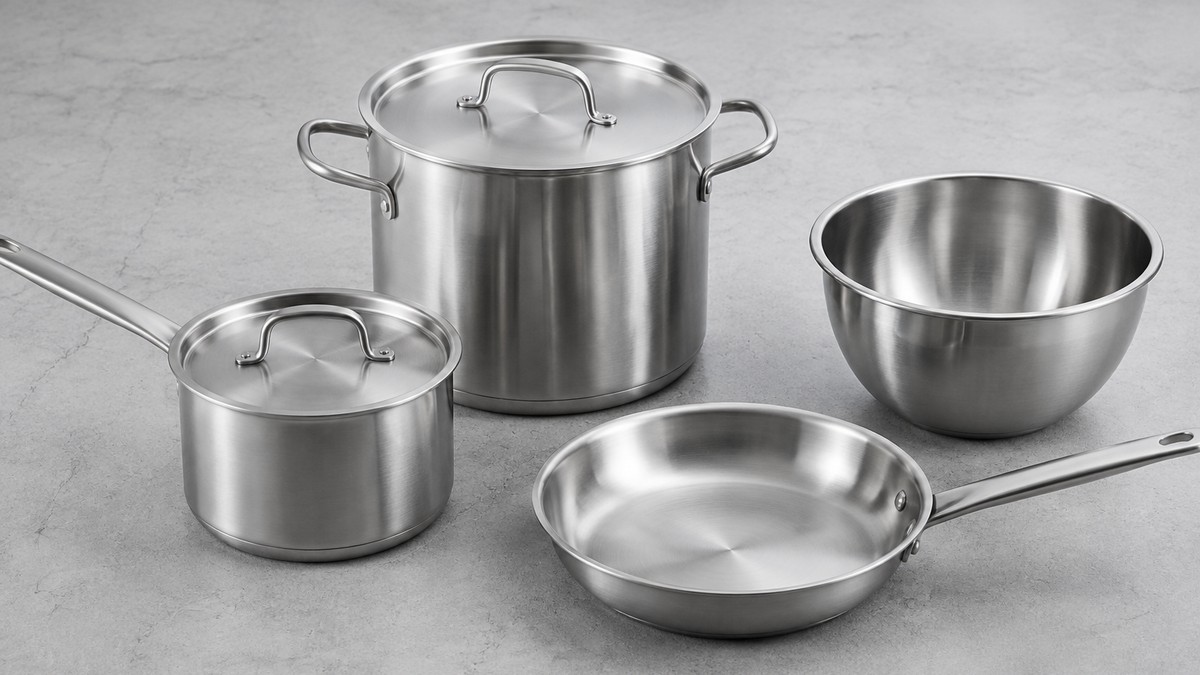
A non-reactive pot is a stockpot, saucepot, or canning pot with a stainless steel, enamel, or glass interior. Pots raise a question the smaller vessels don’t: volume and duration together. Stock simmers for hours, and pickling brine is acid by design.
Canning guidance is where this gets specific, and where the received wisdom is slightly wrong. New Mexico State University Extension’s pickling publication, which follows USDA home-canning guidance, instructs: “Do not use iron, copper, brass, or chipped enamelware utensils. Stainless steel, aluminum, and Pyrex-type utensils are best for heating pickling liquid.”
Read that list again. Aluminum is on the approved side. That’s not an error in the guidance; it’s a distinction most “non-reactive” explainers flatten. Heating brine for a few minutes before it goes into jars is a short, high-turnover contact, and aluminum’s reactivity is a function of exposure time. The prohibition targets iron, copper, brass, and chipped enamelware: vessels that either react hard or expose a reactive base. For a manufacturer, the lesson is that “reactive” is a rate, not a switch, and specifications should state the contact scenario, not just the material.
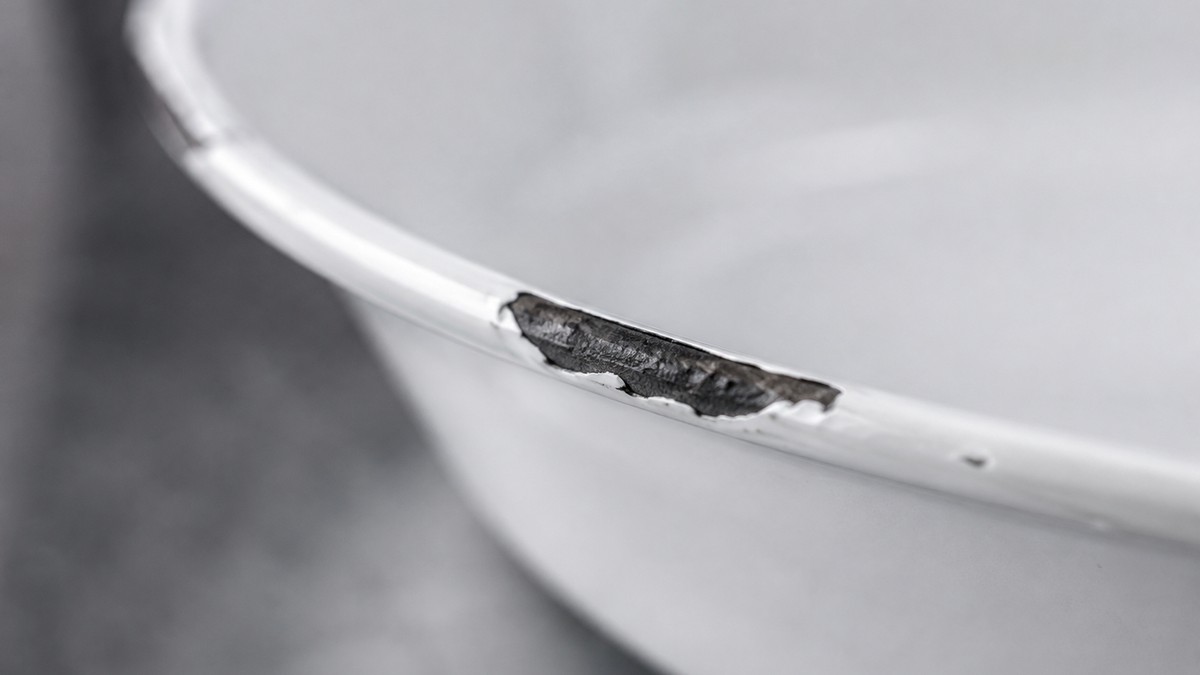
The chipped-enamelware clause deserves its own note. Vitreous enamel is genuinely inert while intact; the International Enamellers Institute describes it as chemically inert, releasing no harmful substances and resisting acids at ambient temperature. One chip, and the cast iron or steel underneath becomes the food-contact surface. That is the single most common way a non-reactive pot quietly stops being one.
In brief USDA-aligned canning guidance names stainless steel, aluminum, and Pyrex-type utensils as best for heating pickling liquid, and rules out iron, copper, brass, and chipped enamelware. Reactivity is a rate set by contact time, not an on/off property of a metal.
What Is a Non-Reactive Bowl or Container?
A non-reactive bowl or container is a glass, stainless steel, glazed ceramic, or food-grade plastic vessel used to hold acidic food without heat. Marinades, dressings, ferments, and cut fruit sit in these for hours or days, so contact time replaces temperature as the driver.
Aluminum is the material to watch. Uncoated aluminum bowls and foil are common, cheap, and reactive: the US ATSDR’s aluminum profile states plainly that frequently cooking acidic foods in aluminum pots exposes a person to more aluminum than cooking in stainless steel or glass. A marinade left in an aluminum tray overnight is the unheated version of the same problem.
Stainless steel is the practical default for commercial prep, and glass for anything acidic held on display. Neither absorbs odor, both survive industrial dishwashing, and neither has a coating to lose. For what “food-grade” means at the alloy level, see our buyer’s guide to food-safe stainless steel.
How Can You Tell If a Pan Is Non-Reactive?
Read the grade, not the pan. If a spec sheet or stamp says 304, 316L, 18/8, or 18/10, the surface is austenitic stainless and non-reactive. If it says enamel or borosilicate glass, the same applies while the surface is undamaged. If it says nothing at all, treat an unlabeled bare metal pan as reactive until proven otherwise.
The magnet test, which circulates as a quick check, does not measure reactivity at all. Per the British Stainless Steel Association’s guidance on magnetic properties, austenitic grades such as 304 (1.4301) are nominally non-magnetic, while cold working can transform some austenite to martensite and give a used pan a noticeable pull. Ferritic 430 is magnetic by structure. So a magnet distinguishes one stainless family from another, and both families resist food acid. A pan that grabs the magnet might be 430 stainless, or it might be bare cast iron. The test tells you nothing you needed to know.
Two checks that do work. First, look at the interior for a coating boundary: a visible glassy layer means enamel, a matte grey or dark layer means ceramic or PTFE, and any chip or scratch through it changes the answer. Second, look at what the manufacturer will put in writing. A supplier who won’t name a grade is telling you something.
In brief A magnet does not test reactivity. Per the British Stainless Steel Association, austenitic 304 (1.4301) is nominally non-magnetic and ferritic 430 is magnetic, and both resist food acid; cold working can also make used 304 attract a magnet. Read the stated grade instead.
Non-Reactive Cookware Glossary
| Term | What it means | Qualifying materials | Main failure mode |
|---|---|---|---|
| Non-reactive pan | Interior does not exchange ions with food acid | 304/316L stainless, enamel, glass, intact coating | Coating worn through |
| Non-reactive saucepan | Same, for long acidic simmering | Stainless, enameled cast iron | Unlined copper interior |
| Non-reactive skillet | Same, for high-heat searing | Stainless, enameled cast iron, coated | Bare cast iron |
| Non-reactive pot | Same, for stock, brine, and canning | Stainless, intact enamelware | Chipped enamel |
| Non-reactive bowl | Holds acidic food unheated without ion transfer | Glass, stainless, glazed ceramic | Uncoated aluminum |
| Non-reactive container | Stores or marinates acidic food | Glass, stainless, food-grade plastic | Aluminum trays and foil |
| Reactive | Surface dissolves measurably into food acid | Uncoated aluminum, unlined copper, bare iron | Flavor, color, ion transfer |
| Passivation | Chromium-oxide layer that re-forms in air | Austenitic stainless (304, 316L) | Nothing to chip |
Grade designations per British Stainless Steel Association; enamel inertness per International Enamellers Institute; copper limitation per US FDA Food Code 4-101.14. Retrieved 2026-08-04.
What Should a Purchase Specification Say Instead?
Not “non-reactive.” No food code defines the phrase, so it can’t appear on an inspection report and it can’t be tested against. What can be audited is a material call-out plus a recognized standard, and buyers who make that swap stop having substitution arguments with their factories.
NSF/ANSI 51, Food Equipment Materials, is the standard written for this job. It sets minimum public health and sanitation requirements for materials used in commercial food equipment, explicitly including stock pots, so that composition and surface finish will not adulterate food or make the equipment hard to clean. It also defines the food zone, the surface intended for direct food contact, which is precisely the surface the word “non-reactive” is groping toward.
On our own OEM lines, acid resistance is decided at material selection and never revisited. We form 304 and 316L body blanks; the passive layer does the rest. There’s no acid-proofing step to skip and nothing to re-apply after 5,000 dishwasher cycles. The specifications that go wrong are the ones that describe a behavior instead of a material, and those get caught after fabrication, when the fix costs a container rather than a line edit.
Three call-outs cover most programs. Name the grade: 304 for general cookware, 316L where chloride exposure is heavy. Name the compliance basis: we run LFGB, FDA, and ISO 9001 documentation on food-contact lines, and the destination market decides which certificate travels with the shipment, and our food-safety compliance import guide maps that by country. Name the construction: single-layer 304 for stockpots and prep ware, clad bases where sauce work needs conduction, as covered in our tri-ply vs 5-ply clad comparison.
The full sequence from alloy family through finish to packaging is in our material selection guide for custom kitchenware. MOQ on our lines runs 500–5,000 pieces per SKU. If you already know your product line, request a quote and name the grade. A spec-level inquiry gets a spec-level answer.
In brief NSF/ANSI 51, Food Equipment Materials, sets minimum public health and sanitation requirements for the materials used in commercial food equipment, stock pots included, and defines the food zone as the surface intended for direct food contact. That is the auditable version of “non-reactive.”
Frequently Asked Questions
What does non-reactive mean on a pan?
It means the pan’s interior won’t exchange metal ions with acidic food. Stainless steel, vitreous enamel, glass, and intact ceramic or PTFE coatings qualify. Uncoated aluminum, unlined copper, and bare cast iron do not. The FDA Food Code bars copper from food below pH 6, a range that includes tomatoes at pH 4.30–4.90.
Is a stainless steel bowl non-reactive?
Yes. Austenitic stainless such as 304 carries a self-repairing chromium-oxide layer, so acidic marinades and dressings can sit in it without meaningful ion transfer. Per the British Stainless Steel Association, the 18/8 and 18/10 labels found on bowls correspond to grade 304, the standard food-contact austenitic steel.
Can I use a non-stick pan as a non-reactive pan?
Yes, while the coating is unbroken. PTFE and ceramic layers are inert to food acids, which is why they’re applied over aluminum bodies. Once scratched through, the exposed aluminum is reactive; ATSDR notes that cooking acidic food in aluminum raises exposure compared with stainless steel or glass.
What can I use if I don’t have a non-reactive pot?
Any stainless steel, glass, or undamaged enamelware vessel works. For canning specifically, NMSU Extension’s USDA-aligned guidance names stainless steel, aluminum, and Pyrex-type utensils as best for heating pickling liquid, and rules out iron, copper, brass, and chipped enamelware entirely.
Does a magnet tell me if a pan is non-reactive?
No. Per BSSA guidance, austenitic 304 is nominally non-magnetic and ferritic 430 is magnetic, yet both resist food acid; cold-worked 304 can also attract a magnet. The magnet identifies a steel family, not reactivity. Read the stated grade instead: 304, 316L, 18/8, or 18/10.
Where to Go Next
The vocabulary resolves into one practical rule: name the surface. “Non-reactive” tells a cook what to reach for and tells a factory nothing at all. A grade, a standard, and a construction call-out tell both. Start with the non-reactive food-safety guide for the chemistry, compare the six materials head to head when you’re choosing between them, and start an OEM inquiry when it’s time to put a grade on paper.
Sources
- US FDA, Food Code, §4-101.14 Copper, Use Limitation; near-verbatim state adoption in Minnesota Rules 4626.0465. Retrieved 2026-08-04, revisor.mn.gov/rules/4626.0465
- Clemson University Extension, “pH Values of Common Foods and Ingredients.” Retrieved 2026-08-04, clemson.edu (PDF)
- British Stainless Steel Association, “Magnetic Properties of Stainless Steels” (SSAS2.81). Retrieved 2026-08-04, bssa.org.uk (PDF)
- British Stainless Steel Association, “Cutlery stainless steel grades ’18/8′, ’18/10′ and ’18/0′.” Retrieved 2026-08-04, bssa.org.uk
- British Stainless Steel Association, “Passivation of stainless steels.” Retrieved 2026-08-04, bssa.org.uk
- New Mexico State University Extension, “Preparing and Canning Pickled and Fermented Foods at Home” (E-318), following USDA Complete Guide to Home Canning. Retrieved 2026-08-04, pubs.nmsu.edu/_e/E318
- NSF/ANSI 51, Food Equipment Materials, scope and food-zone definition. Retrieved 2026-08-04, blog.ansi.org (NSF/ANSI 51-2025)
- ATSDR, “Public Health Statement: Aluminum.” Retrieved 2026-08-04, wwwn.cdc.gov/tsp/phs (aluminum)
- Brittin HC, Nossaman CE, “Iron content of food cooked in iron utensils,” J Am Diet Assoc 86(7), 1986. Retrieved 2026-08-04, pubmed.ncbi.nlm.nih.gov/3722654
- International Enamellers Institute, “What is Enamel?” Retrieved 2026-08-04, iei-world.org/enamel
- UFamcooks keyword analysis, Semrush US database (search volume and keyword difficulty for the “what is a non-reactive ___” question family). Retrieved 2026-08-04.
Request a Quote
Put a grade on paper, not an adjective
We manufacture 304 and 316L stainless kitchenware for OEM buyers in 30+ countries, with LFGB, FDA, and ISO 9001 documentation on food-contact lines and MOQ from 500 to 5,000 pieces per SKU. Name the grade in your inquiry and you get a spec-level answer.
Start an OEM inquiry