Stock Pot Size Guide: What Home Cooks Need to Know
June 7, 2026
Stock pot size refers to the liquid capacity of a pot designed for preparing large batches of soups, stocks, stews, and boils, measured in quarts. Choosing the wrong stock pot size costs you more than convenience. An undersized pot boils over; an oversized one heats unevenly and becomes a safety hazard when full. For most home cooks, the right pot falls somewhere between 6 and 16 quarts, with the sweet spot landing around 8 to 12 quarts for everyday batch cooking. This guide breaks down every size range, explains how cooking style drives the decision, and gives you the math to get it right the first time.
What are the standard stock pot sizes?
Stock pot sizes follow a fairly consistent range across the industry. Residential pots run from 6 to 16 quarts, while commercial sizes start at 20 quarts and scale up dramatically from there. That distinction matters because a 20-quart pot on a home stove creates real problems: the base overhangs most residential burners, heat distribution suffers, and the pot becomes nearly impossible to lift when full.
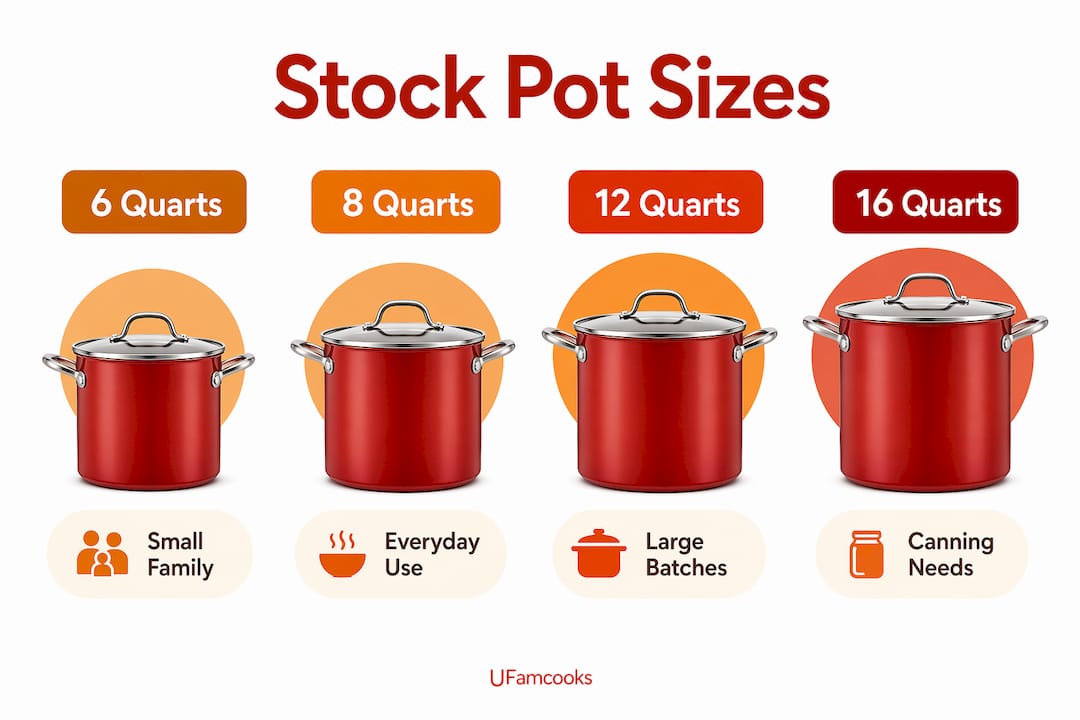
Here is how the standard sizes break down by household need:
| Stock pot size | Best for | Typical use case |
|---|---|---|
| 6 quarts | 1 to 2 adults | Soups, small pasta batches, sauces |
| 8 quarts | 2 to 4 people | Everyday soups, stocks, chili |
| 12 quarts | 4 to 6 people | Batch cooking, whole chickens, larger stocks |
| 16 quarts | 6 to 8 people | Canning, large family meals, seafood boils |
| 20+ quarts | Commercial or specialty | Catering, crawfish boils, large-scale canning |
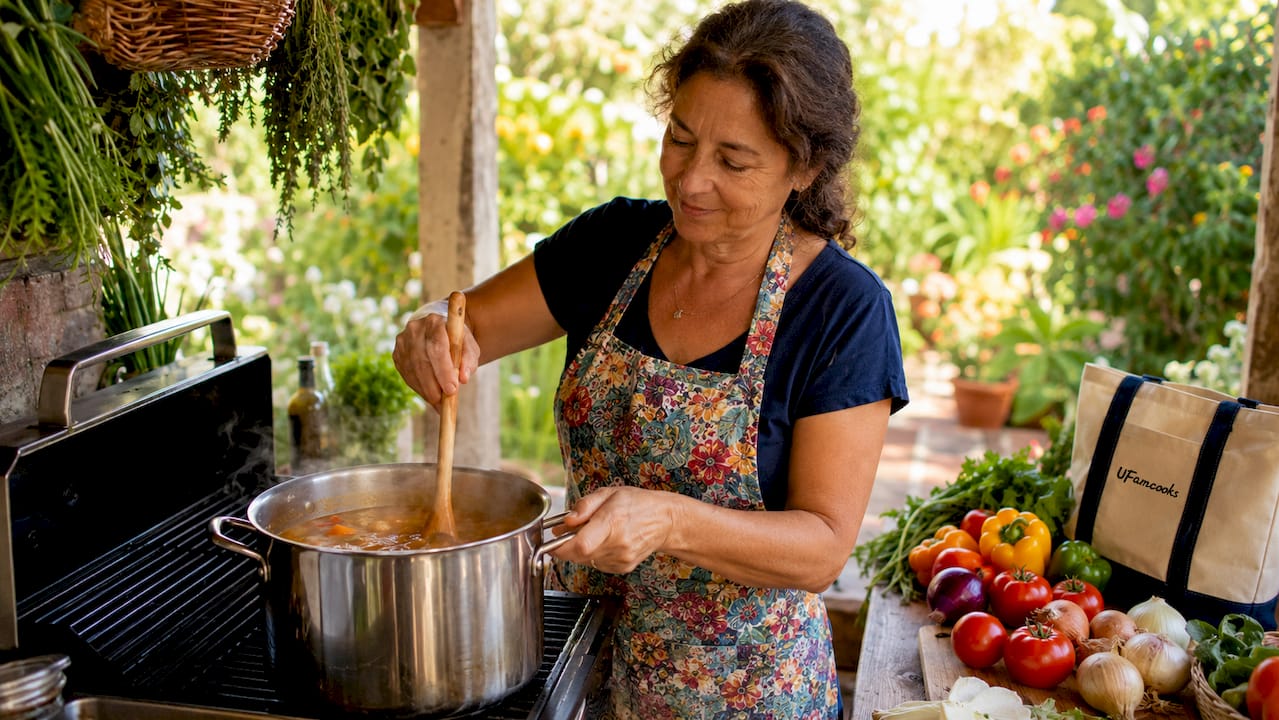
The capacity math is straightforward. Allow 2.5 to 3 quarts per adult when sizing for batch cooking. A family of four needs roughly 10 to 12 quarts of working capacity, which means a 12-quart pot is the practical minimum. A 6-quart pot works well for two adults and two young children, but once teenagers enter the picture, that same pot runs short fast.
Weight is a factor that most buyers ignore until it is too late. Liquid weighs approximately 2 pounds per quart, so a full 16-quart pot tips the scale at over 32 pounds before you account for the pot itself. That is a serious lifting consideration, especially when draining boiling water over a sink.
Pro Tip: Never fill any stock pot beyond 80% of its stated capacity. That 20% headspace prevents boil-overs and gives you room to stir without splashing.
How does cooking style determine the right pot size?
The dish you cook most often should drive your size decision more than household headcount alone. Different recipes demand different volumes, and getting this wrong affects both the result and the experience.
Soups and stocks are the core use case for any stock pot. An 8 to 12-quart pot handles most homemade chicken stock, beef broth, or vegetable soup recipes without crowding the ingredients. Crowding matters because bones and vegetables need to be fully submerged for proper extraction. A pot that is too small forces you to add less water, which concentrates the stock too quickly and can scorch the bottom.
Pasta and grains need more water than most home cooks expect. An 8-quart pot comfortably holds a pound of pasta plus enough cooking liquid to keep the pasta moving freely. Going smaller produces gummy, unevenly cooked pasta because the starch concentration in the water gets too high.
Specialty dishes create their own sizing demands. Biryani is a good example. Dishes like biryani require 12 to 16-quart pots even for small families because rice expands significantly during cooking and needs vertical clearance to steam properly. Undersizing a biryani pot leads to uneven cooking and a scorched bottom layer.
Canning and batch cooking push you toward the larger end of the residential range. Pressure canning requires enough water to fully submerge jars, which typically demands a 12 to 20-quart pot depending on jar size. Seafood boils for a group of six or more almost always require a 16-quart pot at minimum.
- 6 to 8 quarts: everyday soups, pasta, small stocks
- 8 to 12 quarts: batch soups, whole poultry, medium stocks
- 12 to 16 quarts: canning, biryani, large family meals
- 20+ quarts: seafood boils, catering, commercial prep
Pro Tip: If you cook both everyday meals and occasional large batches, buy the 12-quart size. It handles both tasks without the weight penalty of a 16-quart pot.
What material and design features affect stock pot performance?
Size gets you in the right ballpark, but material and construction determine whether a pot actually performs. Two pots of identical capacity can produce very different results depending on how they are built.
Stainless steel is the standard for good reason. It does not react with acidic ingredients like tomatoes or wine, it cleans easily, and it holds up to decades of heavy use. Durable stainless steel and layered construction promote even heating across the base, which matters enormously when you are simmering stock for three hours. Thin, single-layer stainless steel pots develop hot spots and scorch proteins and vegetables on the bottom.
Base diameter is a specification most buyers overlook entirely. A pot base that mismatches the burner size creates uneven heating and hot spots that burn food at the center while leaving the edges undercooked. On a standard residential gas or electric range, burners typically measure 8 to 10 inches across. A 12-quart pot with a 10-inch base fits well. A 20-quart pot with a 14-inch base does not.
Lid design changes how a pot performs for different tasks. Tight-fitting, heavy lids minimize evaporation during long simmers, which is exactly what you want when making stock or broth. Vented or lighter lids work better for boiling pasta or vegetables, where you want some steam to escape and do not need to retain every drop of liquid. Buying a pot with the wrong lid for your primary use case is a small but consistent frustration.
Handle ergonomics become critical at larger sizes. A 12-quart pot full of stock weighs close to 30 pounds. Riveted, loop-style handles that sit close to the pot body give you the most control. Handles that extend outward increase leverage but also increase the risk of catching on cabinet doors or other cookware.
How to choose the right pot for your kitchen setup
Matching pot size to your actual kitchen is the final step, and it involves three practical constraints: storage space, burner size, and budget.
-
Measure your storage space first. Stock pots are tall and wide. A 12-quart pot typically stands 10 to 12 inches tall and 11 inches across. Check your cabinet depth and shelf height before ordering online. Many home cooks buy a pot that physically does not fit in any cabinet and ends up living on the counter permanently.
-
Check your burner diameter. Pull out a tape measure and check the diameter of your largest burner. That number sets the ceiling on your practical pot base size. Experts caution against using large pots on small burners because the heat never distributes properly, regardless of how long you cook.
-
Calculate the full weight. A filled 16-quart pot weighs over 40 pounds when you include the pot itself. If you have any concerns about lifting that weight safely, step down to a 12-quart pot and cook in two batches when needed. Two batches of good stock beats one batch you cannot safely drain.
-
Set a realistic budget. Quality stainless steel pots with multi-layer bases cost more upfront but outlast cheap single-layer alternatives by a decade or more. A well-built 8-quart pot at a higher price point outperforms a poorly built 12-quart pot at a lower one.
-
Default to the 8 to 12-quart range when you are uncertain. Experts recommend 8 to 12 quarts for versatility in home kitchens where storage is limited. This range covers the vast majority of home cooking tasks without the weight and storage penalties of larger pots.
Key takeaways
The right stock pot size for most home cooks is 8 to 12 quarts, selected based on household size, primary cooking tasks, burner diameter, and safe lifting capacity.
| Point | Details |
|---|---|
| Size by household | Allow 2.5 to 3 quarts per adult; a family of four needs at least a 10 to 12-quart pot. |
| Recipe drives size | Biryani, canning, and seafood boils require 12 to 16 quarts even for small households. |
| Base diameter matters | Match pot base to burner size to avoid hot spots and uneven cooking results. |
| Weight is a safety factor | A full 16-quart pot exceeds 40 pounds; choose a size you can lift and drain safely. |
| Material quality counts | Multi-layer stainless steel construction delivers even heat and long-term durability. |
Why I always tell home cooks to resist the urge to go big
Most home cooks I talk to assume bigger is always safer. They buy a 16-quart pot thinking it covers every scenario, then discover it barely fits on the burner, takes forever to heat up, and sits mostly empty for 90% of their cooking. That is not versatility. That is a liability.
My honest recommendation is the 8 to 12-quart range for the majority of home kitchens. An 8-quart pot handles weeknight soups and pasta without drama. A 12-quart pot covers batch cooking, whole chickens, and the occasional canning project. Between those two sizes, you cover nearly every realistic home cooking scenario without the weight penalty of going larger.
The other mistake I see constantly is prioritizing size over construction. A thin-walled 12-quart pot will scorch your stock and warp over time. A well-built stainless steel pot with a lid and a multi-layer base will perform consistently for years. Buy the better pot in the right size rather than the bigger pot in a lesser material. That combination, right size plus quality construction, is what actually produces good cooking results over the long run.
— Jason
Find the right stock pot at Ufamcooks
Ufamcooks manufactures stainless steel stock pots across the full residential and commercial size range, from 6-quart everyday pots to 20-plus-quart batch cooking vessels. Every pot is built with multi-layer stainless steel construction, tight-fitting lids, and ergonomic handles designed for safe handling at full capacity. Because Ufamcooks operates on a factory-direct model, you get professional-grade construction without the retail markup. Browse the full stock pot collection to find the size and configuration that fits your kitchen, your burner, and your cooking style.
FAQ
What is the most common stock pot size for home cooks?
The most common stock pot size for home use is 8 to 12 quarts. This range handles everyday soups, stocks, pasta, and moderate batch cooking without exceeding the weight or storage limits of most residential kitchens.
How big is a stock pot compared to a regular saucepan?
A stock pot is significantly larger and taller than a standard saucepan. Most saucepans range from 1 to 4 quarts, while stock pots start at 6 quarts and scale up to 20 or more quarts for commercial applications.
What size stock pot do I need for canning?
Canning requires a pot large enough to fully submerge jars in boiling water, which typically means a 12 to 20-quart pot. The exact size depends on jar height and how many jars you process per batch.
Can I use a stock pot that is too large for my burner?
Using a pot with a base significantly wider than your burner creates hot spots at the center and underheated zones at the edges. This produces uneven cooking results and can scorch food directly above the flame while leaving the rest of the pot barely simmering.
How do I know if a stock pot is too heavy to use safely?
Calculate the full weight by multiplying the quart capacity by 2 pounds, then add the pot’s dry weight. A 16-quart pot filled with liquid weighs over 40 pounds before you lift it. If that weight exceeds what you can safely carry and drain over a sink, choose a smaller size.
Recommended
- Stainless Steel Cooking Pot with Lid – Excellent Kitchenware Manufacturer & Supplier
- Small-Capacity Stainless Steel Baking Pan – Excellent Kitchenware Manufacturer & Supplier
- Stainless Steel Cookware Pot with Steamer Set – Excellent Kitchenware Manufacturer & Supplier
- Stainless Steel Large-Capacity and Small-Capacity Baking Pan Set – Excellent Kitchenware Manufacturer & Supplier