¿Se puede meter el acero inoxidable al microondas? Una guía de seguridad
6 de junio de 2026
Standard stainless steel cookware is not microwave safe. Placing it in a microwave causes the metal to reflect electromagnetic waves, generating sparks, damaging the appliance, and creating a real fire hazard. That said, the full answer is more nuanced than a flat “no.” A category of specially engineered containers, built from 304 grade stainless steel with rounded geometry and electropolished surfaces, has been designed and certified for safe microwave use. This article explains the physics behind the risk, the design features that make microwave-safe stainless steel possible, and the practical rules every home cook needs to follow.
Can you microwave stainless steel? Here’s why standard cookware fails
The short answer is no for standard cookware, and the reason comes down to physics. Microwaves are electromagnetic waves that heat food by causing water molecules to vibrate. Metal does not absorb those waves. It reflects them.
When you put a standard stainless steel pot or container in a microwave, the reflected energy concentrates at edges, seams, and any sharp corner on the surface. That concentration of electrical charge causes arcing, which is the technical term for the visible sparks you see. Those sparks can scorch the interior walls of your microwave, damage the magnetron (the component that generates microwave energy), and in worst cases ignite nearby materials.
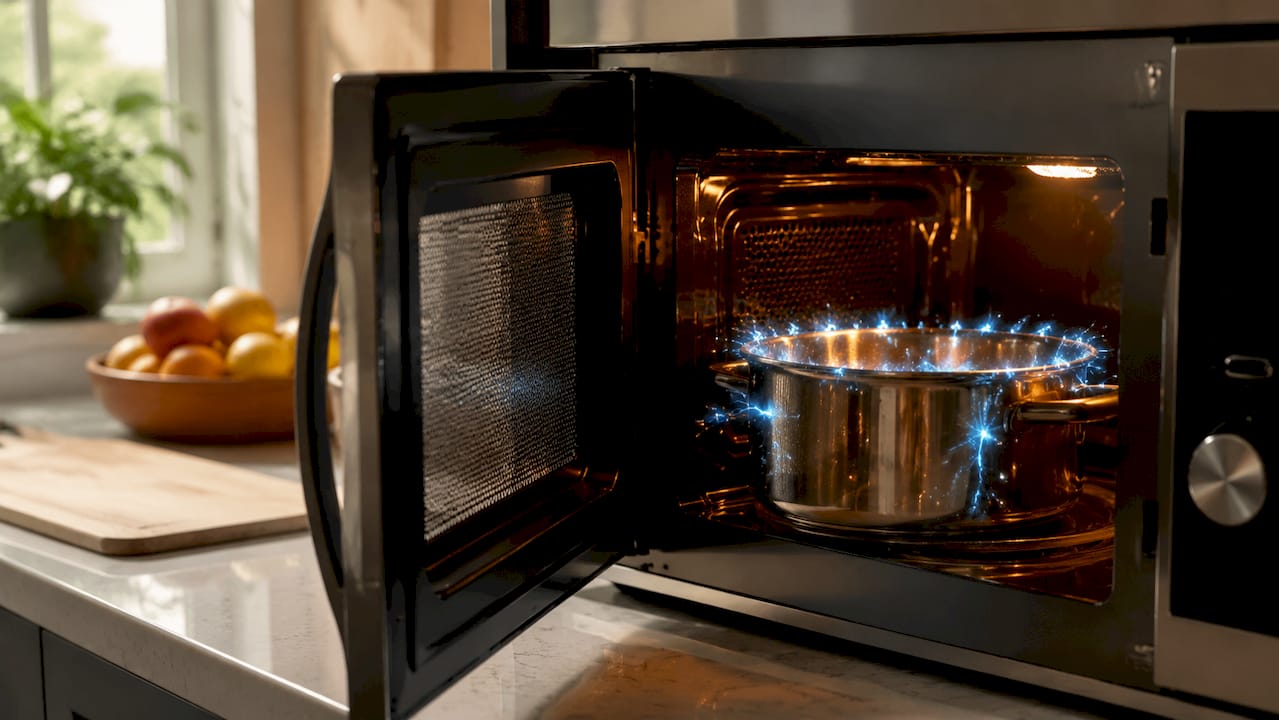
The geometry of standard cookware makes the problem worse. Handles, rivets, and sharp stamped edges all act as focal points for electrical discharge. Even a small stainless steel fork causes sparks at its tines for exactly this reason. The energy concentrates at the sharpest point and discharges.
There is also a food safety dimension. Because microwaves cannot penetrate metal walls, food inside a standard stainless steel container does not heat evenly. Cold spots form, and in proteins like chicken or ground beef, those cold spots can allow bacteria to survive. This is not a theoretical risk. It is a documented consequence of using the wrong container.
Pro Tip: If you are ever unsure whether a container is microwave safe, fill it with one cup of water and place it alongside the container for 30 seconds on high. If the container gets hot but the water does not warm, the container is absorbing microwave energy in a way it should not.
The key hazards of microwaving standard stainless steel are:
- Electrical arcing and visible sparks at edges, seams, and sharp corners
- Damage to the microwave’s magnetron and interior walls
- Uneven heating that creates cold spots and food safety risks
- Potential fire hazard if sparks contact food packaging or paper towels
How microwave-safe stainless steel containers are engineered
The safety of a stainless steel container in a microwave depends on engineering design, not just the alloy itself. That distinction matters because it means the question “can stainless steel go in the microwave” does not have a single yes or no answer. It depends entirely on how the container was built.
Manufacturers who produce genuinely microwave-safe stainless steel containers address the arcing problem through four specific design choices.
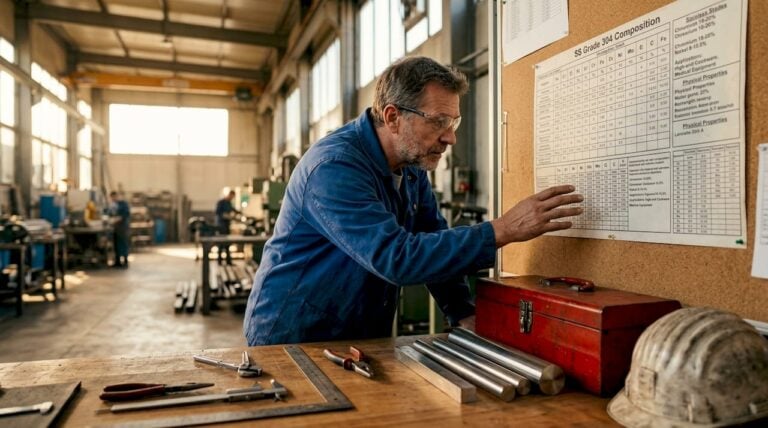
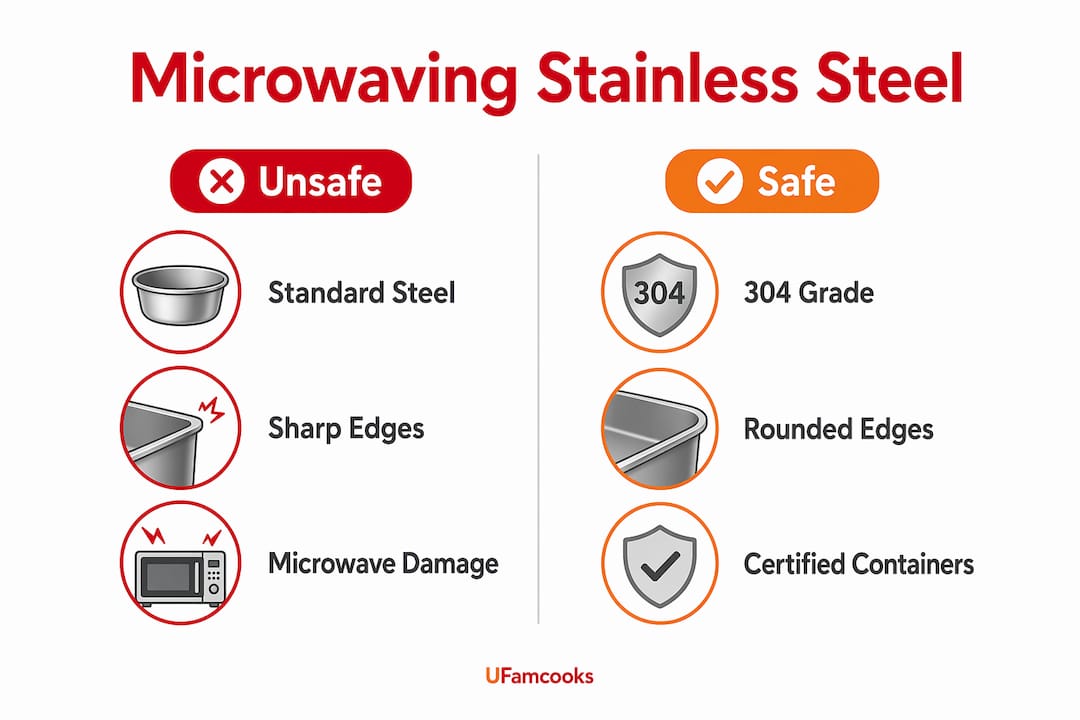
Grade selection. 304 grade stainless steel is the standard for microwave-safe containers. Its alloy composition (18% chromium, 8% nickel) provides corrosion resistance and structural stability under repeated heating cycles. You can learn more about how alloy formulation affects kitchenware safety in Ufamcooks’ breakdown of 18/8 stainless steel properties.
Rounded geometry. Rounded, smooth designs disperse electric fields rather than concentrating them. Microwave-safe containers have no sharp stamped corners, no exposed rivets, and no protruding handles that could act as discharge points.
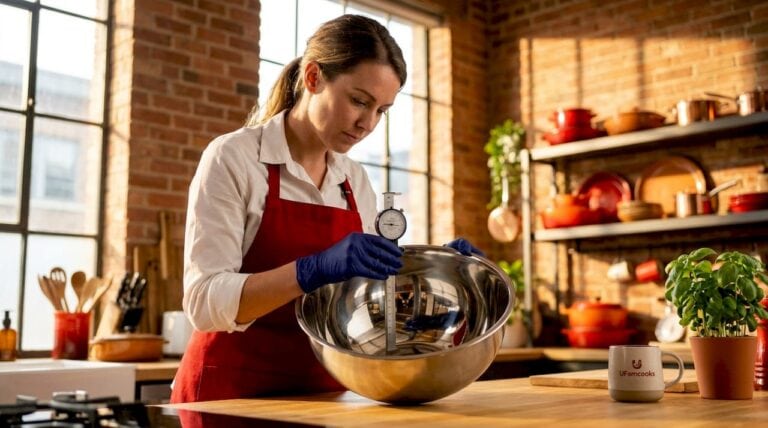
Electropolished surfaces. Electropolishing removes microabrasions from the metal surface at a microscopic level. Those tiny surface irregularities, invisible to the naked eye, are enough to initiate arcing under microwave radiation. An electropolished finish eliminates them.
Vented lids. Steam pressure builds inside any sealed container during heating. Microwave-safe stainless steel containers use lids with pressure vents to release steam safely, preventing both lid ejection and pressure-related damage.
Certification matters as much as design. Certified microwave-safe containers undergo testing before market release to confirm they do not arc under standard microwave conditions. Look for explicit “microwave safe” labeling on the container itself, not just on the packaging. The label on the box can be marketing. The label on the container is a tested claim.
Pro Tip: When evaluating a stainless steel container’s microwave-safe claim, check whether the manufacturer publishes the specific grade of steel and the testing standard used. Vague claims like “safe for reheating” without grade or certification details are a red flag.
Understanding how industry certifications affect microwave-safe claims on stainless steel products helps you separate genuine safety from marketing language.
Microwave-safe stainless steel vs. glass and ceramic
Glass and ceramic remain the most common microwave-safe materials, and for good reason. They are transparent to microwave energy, meaning the waves pass through the container and heat the food directly. Stainless steel, even the microwave-safe variety, does not work the same way.
| Feature | Microwave-safe stainless steel | Glass / Ceramic |
|---|---|---|
| Heating efficiency | Lower. Microwaves do not penetrate metal walls, so heating relies on conduction from the container surface. | Higher. Microwaves pass through and heat food directly. |
| Durability | High. Resistant to drops, chips, and thermal shock. | Moderate to low. Glass and ceramic can crack or shatter. |
| Chemical safety | No plastic contact, no leaching under heat. | Generally safe, though some glazed ceramics contain lead. |
| Heating uniformity | Uneven without careful technique. | More uniform for most foods. |
| Portability and storage | Excellent. Lightweight and stackable. | Heavier and more fragile. |
The practical implication is that microwave-safe stainless steel works best for reheating liquids, soups, and stews where the liquid itself distributes heat. It is less reliable for solid foods like casseroles or rice, where uneven heating is more likely to create cold spots. Glass and ceramic remain more reliable for general microwave heating because of their superior energy transmission.
Where microwave-safe stainless steel earns its place is in durability and chemical safety. A stainless steel container will not shatter if dropped, will not leach chemicals under heat the way some plastics do, and can go from microwave to refrigerator without risk of thermal cracking. For meal preppers, parents packing kids’ lunches, or anyone who needs a container that survives daily use, those advantages are real.
Many consumer products marketed as stainless steel are not microwave-safe despite claims, which means skeptical evaluation of any product before use is warranted. The presence of a stainless steel finish does not guarantee the underlying design meets microwave-safe standards.
Safe practices for microwaving stainless steel containers
Even a properly certified microwave-safe stainless steel container requires correct handling. The engineering reduces risk. Your technique eliminates it.
Follow these rules every time:
- Use only labeled containers. Only put stainless steel in the microwave if the container itself carries an explicit “microwave safe” label. Do not assume based on appearance or brand reputation alone.
- Never microwave an empty container. Empty containers can still spark because there is no food or liquid to absorb the microwave energy. Always heat with contents inside.
- Inspect before every use. Physical damage like dents or scratches creates new sharp points on the surface that concentrate microwave energy and cause arcing. A container that was safe when new may not be safe after a hard drop.
- Use moderate power settings. Following manufacturer instructions on power level and heating time reduces the risk of overheating the container and damaging both the container and the appliance.
- Remove or vent the lid. Even vented lids should be positioned correctly before heating. A fully sealed lid, even on a microwave-safe container, can build dangerous steam pressure.
- Center the container. Keep the container away from the microwave walls. Contact between the container and the metal interior increases arcing risk.
- Do not stack containers. Metal-on-metal contact inside a microwave creates additional discharge points. Heat one container at a time.
Pro Tip: Start with 50% power for the first heating cycle when using a microwave-safe stainless steel container for the first time. This lets you observe how the container behaves before committing to full power.
The precision required in stainless steel fabrication to achieve microwave-safe performance is significant, which is why inspecting containers for physical damage before each use is not overcautious. It is the correct practice.
Key takeaways
Standard stainless steel is never microwave safe, but 304 grade containers engineered with rounded geometry, electropolished surfaces, and vented lids can be used safely when handled correctly.
| Point | Details |
|---|---|
| Standard stainless steel is unsafe | Reflects microwaves, causes arcing, damages appliances, and creates fire hazards. |
| Design determines safety | Microwave-safe containers use 304 grade steel, rounded edges, and electropolished surfaces to prevent sparking. |
| Certification is required | Only use containers with explicit microwave-safe labeling backed by testing, not just marketing claims. |
| Damage voids safety | Dents and scratches create new arcing points. Inspect every container before microwaving. |
| Glass and ceramic heat more evenly | Microwave-safe stainless steel is best for liquids. Glass or ceramic is more reliable for solid foods. |
What I’ve learned from years of watching people microwave the wrong containers
The most common mistake I see is not someone deliberately ignoring the rules. It is someone assuming that because a container looks high quality, it must be safe for everything. Stainless steel has a premium feel. It looks like it should handle anything. That assumption gets people into trouble.
I have seen home cooks transfer leftovers from a glass dish into a stainless steel container specifically because the stainless steel “looked cleaner” and then microwave it without a second thought. The result was a sparking microwave and a ruined container. The container was not labeled microwave safe. It was just a good-looking piece of kitchenware.
My honest advice is this: treat the microwave-safe label the same way you treat a food expiration date. You do not eat food past its date because it looks fine. You do not microwave a container because it looks safe. The label is the only reliable signal.
I also think the industry has done a poor job of communicating the difference between a stainless steel container that is microwave safe by design and one that simply has not melted yet. Those are not the same thing. A container that survives one or two microwave sessions without visible damage is not certified safe. It got lucky.
For anyone building a kitchen setup they can rely on, the right move is to own a small set of certified microwave-safe stainless steel containers for liquids and soups, and keep glass or ceramic for everything else. That combination covers nearly every reheating scenario without compromise.
— Jason
Ufamcooks microwave-safe stainless steel kitchenware
Ufamcooks manufactures stainless steel kitchenware built to the standards this article describes. Their containers use 304 grade stainless steel, rounded geometry, and electropolished finishes, with each product passing multi-stage quality control before it ships. For home cooks who want containers they can trust, the stainless steel food storage set is engineered for durability and safety across daily use. For a broader look at what Ufamcooks offers, the full kitchenware product range covers everything from storage containers to cooking pots. Every product comes with transparent specifications so you know exactly what you are buying.
Preguntas frecuentes
Can you put stainless steel in the microwave safely?
Only containers explicitly labeled “microwave safe” and engineered with rounded edges, 304 grade steel, and electropolished surfaces are safe. Standard stainless steel cookware reflects microwaves and causes arcing.
What happens if you accidentally microwave stainless steel?
The metal reflects microwave energy, causing visible sparks at edges and corners. This can damage the microwave’s magnetron, scorch the interior, and in some cases start a fire.
Is 304 stainless steel microwave safe?
304 grade stainless steel is the material used in microwave-safe containers, but the grade alone does not guarantee safety. The container must also have rounded geometry, an electropolished finish, and a microwave-safe certification label.
Why does stainless steel spark in the microwave?
Sharp edges and corners concentrate reflected microwave energy until the charge discharges as a visible spark. Rounded, smooth containers disperse that energy instead of concentrating it, which is why geometry is as important as material.
Can you heat stainless steel water bottles or travel mugs in the microwave?
No. Standard stainless steel water bottles and travel mugs are not designed for microwave use. They lack the rounded geometry and electropolished finish required for safe microwave heating and will arc or spark.